
Cymatics: when sound reveals the geometry of the universe

"Everything in life is vibration" Albert Einstein's famous phrase takes on new meaning today, in the light of modern discoveries in physics and acoustics. What if sound had the power to structure matter? What if invisible vibrations could form shapes?
This is precisely what cymatics reveals, a fascinating discipline that makes sound visible. Through astonishing experiments, it sheds light on the profound links between frequency, form and vibration, and invites us to rediscover the world from a more subtle, but also more harmonious angle.
In this article, we'll explore the origins of the cymatic process, its emblematic figures such as the Chladni figures, the research of Hans Jenny, the contribution of the Cymascope, as well as its applications in science, art, well-being... and perhaps even in your everyday life.
What is cymatics? Definition and meaning
Cymatics is a scientific discipline that studies how sound waves and vibrations influence matter.
The term cymatics comes from the Greek kyma, meaning "wave".
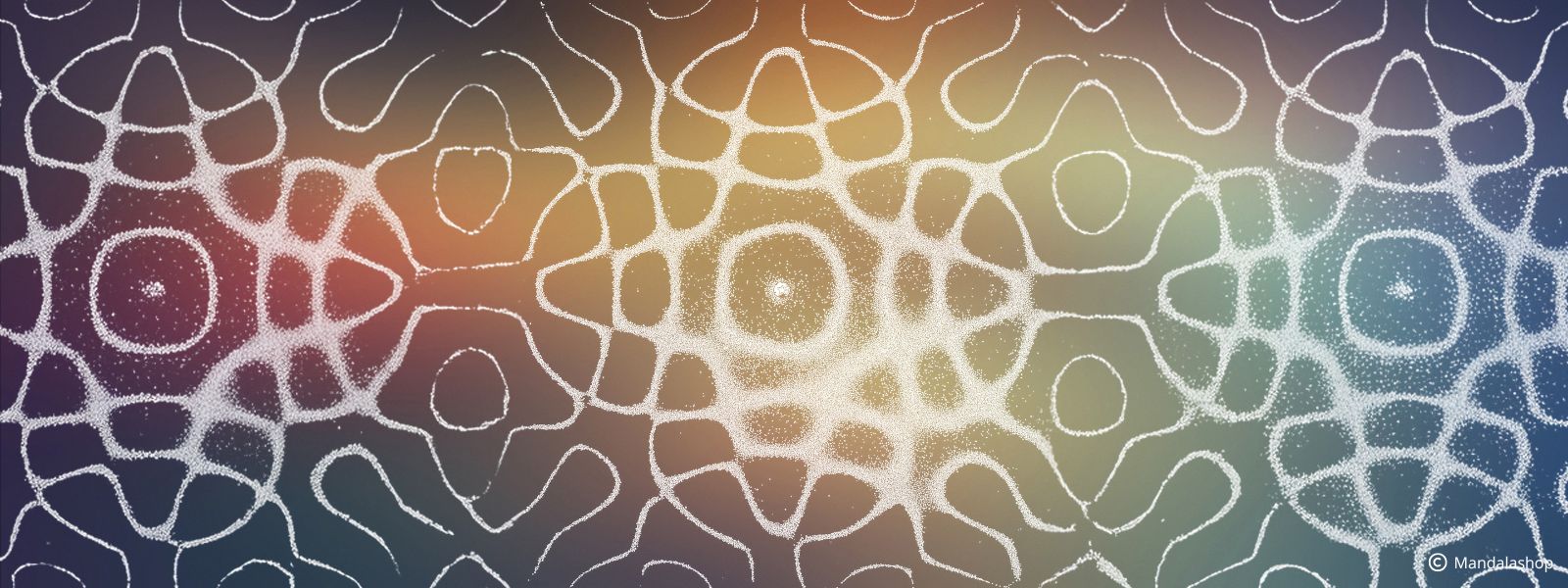
Its principle is based on a simple but fascinating observation: when materials such as sand, water or fine powders are subjected to a sound frequency, they spontaneously reorganize themselves into harmonious geometric patterns.
These figures, often symmetrical and reminiscent of sacred geometry, vary according to the frequency and amplitude of the sound used. The higher the frequency, the more complex and detailed the shapes become. Cymatics thus enables us to visualize sound and observe how the invisible - vibrations - structure the material universe.
This science of sound opens a unique door to understanding the profound links between frequency, matter and consciousness. It inspires researchers, artists and wellness practitioners alike, offering tangible proof that everything is vibration, as many scholars and ancient traditions have foreseen.
Origin of the cymatic process: from Chladni's Figures to Hans Jenny
Before understanding the fascinating impact of the science of vibrations on matter and spirituality, it's essential to look back at the origin of the cymatic process. This journey takes us from the first experiments carried out in the XVIIIᵉ century with Chladni figures to the groundbreaking research of Hans Jenny, which gave birth to modern cymatics.
1. What is the theory behind Chladni's figures?
In the late 18th century, Ernst Chladni (1756-1827), nicknamed the "father of modern acoustics", discovered that when sand was sprinkled on a metal plate and vibrated with a bow, geometric patterns appeared. These shapes, known as Chladni figures, change according to the frequency applied: the higher the frequency, the more complex the patterns become.
This discovery laid the foundations for the visualization of sound: it showed that vibrations are not only audible, but also visible and structuring for matter.
2. Hans Jenny and modern cymatics
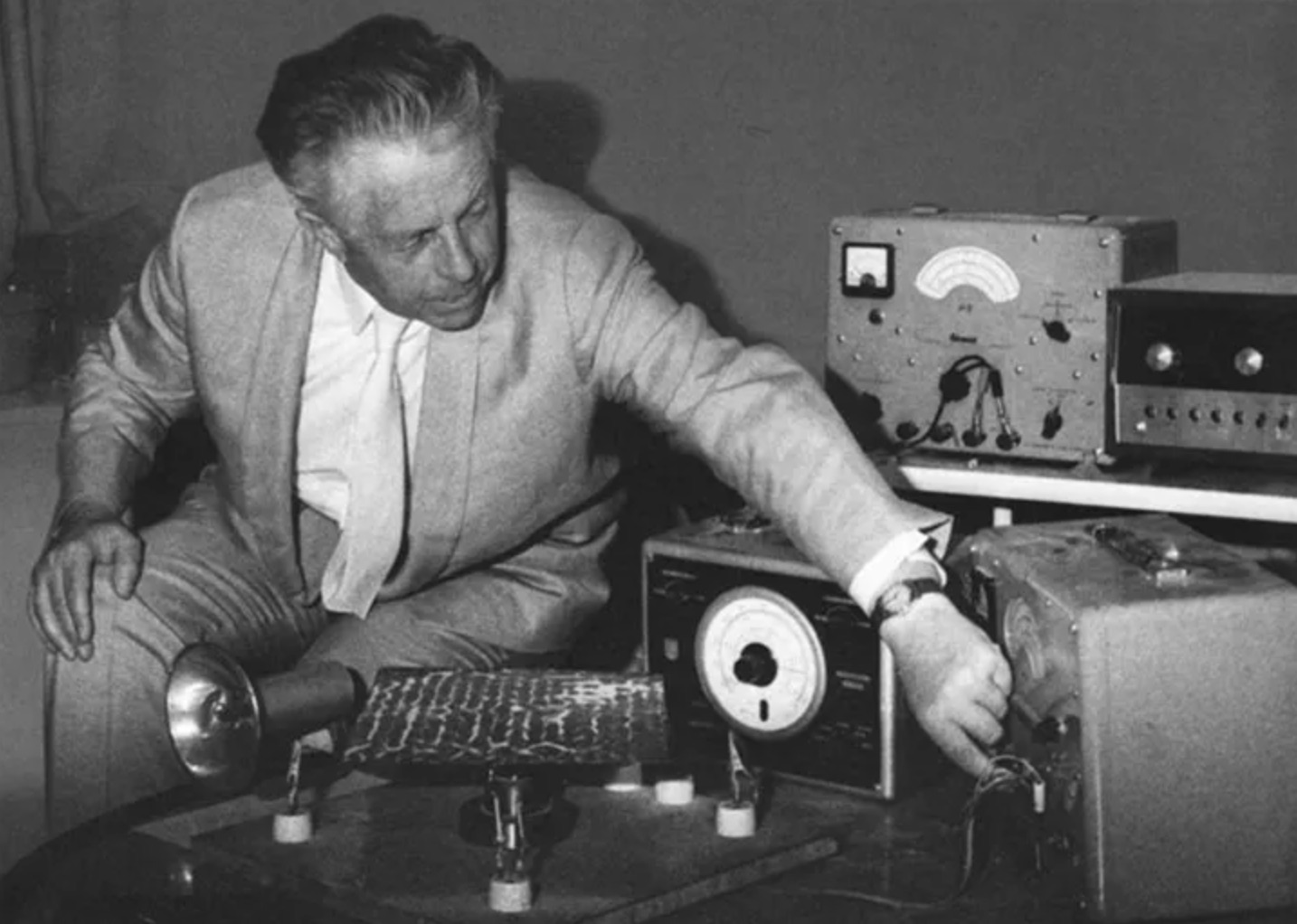
In the mid-twentieth century, Swiss physician and researcher Hans Jenny (1904-1972) took up and modernized these experiments. He coined the term "cymatics" and extended his observations to powders, liquids and even gases. His work demonstrates that vibrations not only shape aesthetic patterns, but also influence the states of matter themselves.
His experiments, filmed and documented, reveal that matter reorganizes itself in real time as a function of frequency: each note, each sound generates its own, repeatable structure.
These observations open up a new way of understanding nature.
3. Leonardo da Vinci, an intuitive precursor of cymatics?
Leonardo da Vinci spent a long time observing the circular waves formed by a drop falling into water. He drew with remarkable precision the concentric waves propagating from a central point - a direct representation of the vibratory behavior of a liquid.
Long before Chladni, Leonardo understood that sound is a vibration transmitted through a medium. He wrote:
"Sound is a vibration of the air that propagates in circles."
This description is very clearly in line with the foundation of cymatics: sound is a mechanical wave, and it structures the space it passes through.
In his sketches of whirlpools, spirals, flows of water or leaves, Leonardo explores what we might today call the vibratory geometry of nature. His drawings echo the patterns generated by cymatics - although he didn't have the tools to make them visible from sound.
So, yes, in a sense, Leonardo da Vinci is an intuitive precursor of cymatics.
Even if he didn't experiment with sound figures, his meticulous observation of nature, his interest in fluid movements, repetitive patterns and the link between sound, matter and form make him a visionary precursor of what cymatics would reveal a few centuries later.
How does cymatics work? What shapes the sound?
1. Frequency function
In a sound wave experiment, a sound wave is sent through a plate, membrane or liquid. The function of the frequency determines the shape obtained:
- Low frequencies: simple patterns, lines and circles.
- High frequencies: complex patterns, interlacing and figures reminiscent of fractal geometry.
This correspondence between sound and shape illustrates a fundamental truth: matter structures itself in response to vibrations, obeying universal harmonic laws.
2.The supports and materials used
- Metal plates sprinkled with sand (Chladni's method).
- Liquids (water, oils) to observe shapes in continuous movement.
- Fine powders or semolina for better definition of patterns.
These supports react differently according to their density and elasticity, enabling us toexplore how vibrations interact with various states of matter.
The Cymascope: the modern eye for cymatics
Today, cymatics benefit from advanced technologies such as the Cymascope. This device transforms sounds into high-definition vibratory images, capturing details invisible to the naked eye. Used in scientific research, music therapy and even artistic projects, the Cymascope opens up a new era in sound visualization.
Thanks to the Cymascope, researchers have been able to observe the "vibratory signature" of a human voice, a bird song or even a heartbeat. Each sound becomes a unique visual imprint, revealing the hidden order in what we perceive as chaos.
Cymatic patterns and sacred geometry: a universal language
The patterns revealed by the vibratory process are not random: they recall archetypal shapes found in nature and spiritual traditions. Spirals, circles, hexagons... these figures can be found in shells, snowflakes and flowers, as well as in ancient sacred symbols.
Link to sacred geometry
- The Flower of Life: a recurring motif in cymatic experiences at certain frequencies.
- The Sri Yantra: triangular structure observed in vibrating liquids.
- The Fibonacci sequence: present in spiral patterns obtained by resonance.
These correspondences reinforce an ancient intuition: sound and form are two expressions of the same vibratory reality.
Cymatics in nature: the harmony of living forms
Sound-generated figures are not confined to metal plates or laboratories. They can be found everywhere in nature, like a universal vibratory signature. The spirals of seashells, the symmetry of snowflakes, the patterns of flowers or the concentric rings on the surface of water are not the result of chance: they respond to the same vibratory laws as those observed during cymatics experiments.
Studies show that even on a microscopic scale, cells and water molecules organize themselves according to geometric patterns dictated by sound waves and surrounding frequencies. This suggests that life itself develops according to a silent music that underpins all creation. This natural harmony, visible in the fractals and proportions of living things, resonates with the ancient teachings of sacred geometry.
Fascinating cymatics experiments on video
Cymatics is particularly visual, and numerous videos are circulating online, allowing you to see these patterns live. Among the best-known experiments:
- Chladni figures created on a metal plate set in vibration by a bow.
- Liquid patterns filmed at high speed, evolving like living mandalas.
- Experiments using several superimposed frequencies, producing almost holographic 3D shapes.
These demonstrations show concretely that every sound carries an invisible architecture.
1. Cymatics experiment on water
2. Cymatics experiment on sand
Contemporary applications of cymatics: from well-being to research
1. In science: visualizing the invisible
Cymatics opens a unique window onto the world of vibrations. In the laboratory, it enables us to study how sound waves influence the states of matter: liquids, powders, biological membranes... Today, researchers use tools like the Cymascope to map frequencies and analyze their impact on living and non-living matter. This approach is used in acoustics, materials physics and even cell biology to understand how vibrations shape the structure of living matter.
2. In art and design: sound meets form
Cymatic patterns, with their Chladni figures and natural mandalas, inspire many contemporary artists and designers. Some create interactive installations where visitors see sound become form in real time. Others integrate these patterns into textile, architectural or decorative creations, bringing a symbolic and organic dimension to their works. This fusion of science and aesthetics shows that cymatics is also a source of artistic wonder.
3. Wellness: harmonizing through frequencies
In wellness, cymatics can be found in sound practices such as Tibetan bowls, gongs and tuning forks. Their vibrations pass through the body, recalling the principles observed in cymatics experiments: matter is reorganized under the effect of sound. These instruments promote deep relaxation, helping to calm the mind and support emotional regulation. They offer a simple, yet powerful experience for refocusing and rediscovering inner harmony.

4 What is cyma therapy?
Cyma therapy is a vibratory approach that uses precise sound frequencies to influence living matter. Developed in the 1960s by Dr. Peter Guy Manners, it is based on a key idea: every organ and tissue in the body has a natural frequency; when it is disturbed (stress, imbalance), it can be "re-tuned" by sending out the corresponding frequency.
In practical terms, cymatic devices emit sounds or vibrations directly onto the skin or via water, enabling gentle, non-invasive cellular resonance. This method is used as a complement to traditional treatments to promote relaxation, reduce tension and support overall harmonization of body and mind.
Beyond its physical applications, cyma therapy is part of a broader vision in which sound is considered a universal language capable of acting on emotions and vital energy. Practitioners report a range of benefits: calming of the nervous system, improved sleep, support for emotional regulation, a feeling of lightness and grounding after a session. Some testimonials also mention a boost to concentration and an increased sense of unity between body and mind, bringing this practice closer to deep meditative effects.
Why does cymatics fascinate us?
The science of vibrations brings together three dimensions that captivate the human mind:
- Scientific: it demonstrates that sound structures matter.
- Aesthetic: it reveals strikingly beautiful patterns.
- Spiritual: it confirms the idea that everything is interconnected by vibration.
In a world where science and spirituality often seem opposed, cymatics acts as a bridge: it invites us to see the universe not as a cold machine, but as a living symphony.
Conclusion: seeing the world differently
Cymatics reveals a universal truth: every vibration shapes matter and gives rise to ordered forms. What once seemed esoteric - the idea that "everything is vibration" - now finds an echo in modern science. The experiments of Chladni and Hans Jenny, extended by technologies such as the Cymascope, literally allow us to see the invisible: the geometric language of sound.
This discovery is not confined to the laboratory. It invites us to observe nature - the spirals of shells, the patterns of flowers, the structure of crystals - as the expression of a universal vibratory harmony. She also reminds us that our thoughts, words and sounds influence our own inner balance. This is reminiscent of Masaru Emoto's experiments with water.
Have you ever felt the effect of a vibration on your body? Can the chanting of a Tibetan bowl, the sound of a gong or even your own voice soothe or refocus you? By consciously experiencing these sounds, you may discover a new way of resonating with yourself and the world around you.
Take a moment to listen. Observe how your body responds. What if the harmony you're looking for is already within you, ready to vibrate?
If you liked this article, feel free to comment, share and subscribe to our newsletter to be informed of future issues.
Sources
📚 Reference books
Hans Jenny - "Cymatics: A Study of Wave Phenomena and Vibration" - Volume 1 (1967) and Volume 2 (1974)
The seminal work. In it, Jenny presents his experiments, photos and detailed observations on the effects of sound on different materials.
→ Downloadable here in English, highly illustrated.
🌐 Specialist websites
Official Cymascope: https://cymascope.com/
The website of contemporary pioneer John Stuart Reid. Scientific, artistic and educational content. You'll find videos, cymatic images, technical explanations and medical research.
Science & Nonduality (SAND): https://scienceandnonduality.com/
Platform that addresses the bridges between modern science, spirituality and consciousness. Contains popular content on cymatics, sound and interconnection.
YouTube - Official Cymascope Channel : https://www.youtube.com/@cymascope4986
To see concrete examples of images produced by real sounds (human voices, music, instruments).


 End of an Era: Are We on the Threshold of a New World?
 Samhain: What Does the Dark Season Really Reveal?
 Viking Symbols: Myths, Mysteries, and Truths
