
Black Friday: chromatic and symbolic analysis

Aren't you tired of getting Black Friday deals?
I'll tell you what: I'm sick of it!
I think it's really stupid.
Now I'm going to give you my chromatic and symbolic analysis of this habit that comes from the United States and give you 3 reasons why you will NEVER find Black Friday on our online store.
Symbolic analysis of Black Friday
Well, let's go back in history..
Black Friday literally means "Black Friday" and this name can be rather curious to designate a day where promotions are flooding in stores as well as on the Internet.
The expression does not date from today since the first time it was used would date from September 1869, to designate a financial crash in the United States due to the manipulation of two businessmen to aggressively raise the price of gold.
It came back in force in the mid-1960s, this time to refer to the traffic jams on the roads as well as in the shops that took place the day after Thanksgiving, which always falls on a Friday.
In France, we have been celebrating this date since 2013.
So basically we use rather negative or dark events to celebrate and glorify consumerism. Great...
As much as we could take the opportunity to change the writing, you know kind of like how some people come and lay wreaths of flowers at the site of an accident, as if to ward off the spell.
Well, no, we keep calling it "Black Friday". I find that frankly hopeless.
How about a "white Monday"? Wouldn't that be more original?
Chromatic analysis: black is black, there's no hope
The color black is certainly the most complex of the color spectrum. The painter Auguste Renoir said of it that:"It is the queen of colors because it contains them all".
The color black has acquired over time a very bad reputation. It is often associated with death, darkness and the forces of evil, in opposition to the pure and virginal heavenly light. Yet, since time immemorial, light and shadow, good and evil, creation and destruction, have been intrinsic to Nature.
The symbolism of black throughout the world:
What is really interesting to know is that depending on the country and tradition, black has radically different meanings.
In the West it is a color with a negative tendency. It is worn by old pious women in the Mediterranean basin (Italy, Spain, Portugal...).
In China, young boys are dressed in black.
In Thailand, it is the color of bad luck, while in India, black is recognized to restore balance and health. It represents the original purity: in Hinduism immortality is symbolized by the black god Krishna, while the poor mortal is symbolized by Arjuna the white.
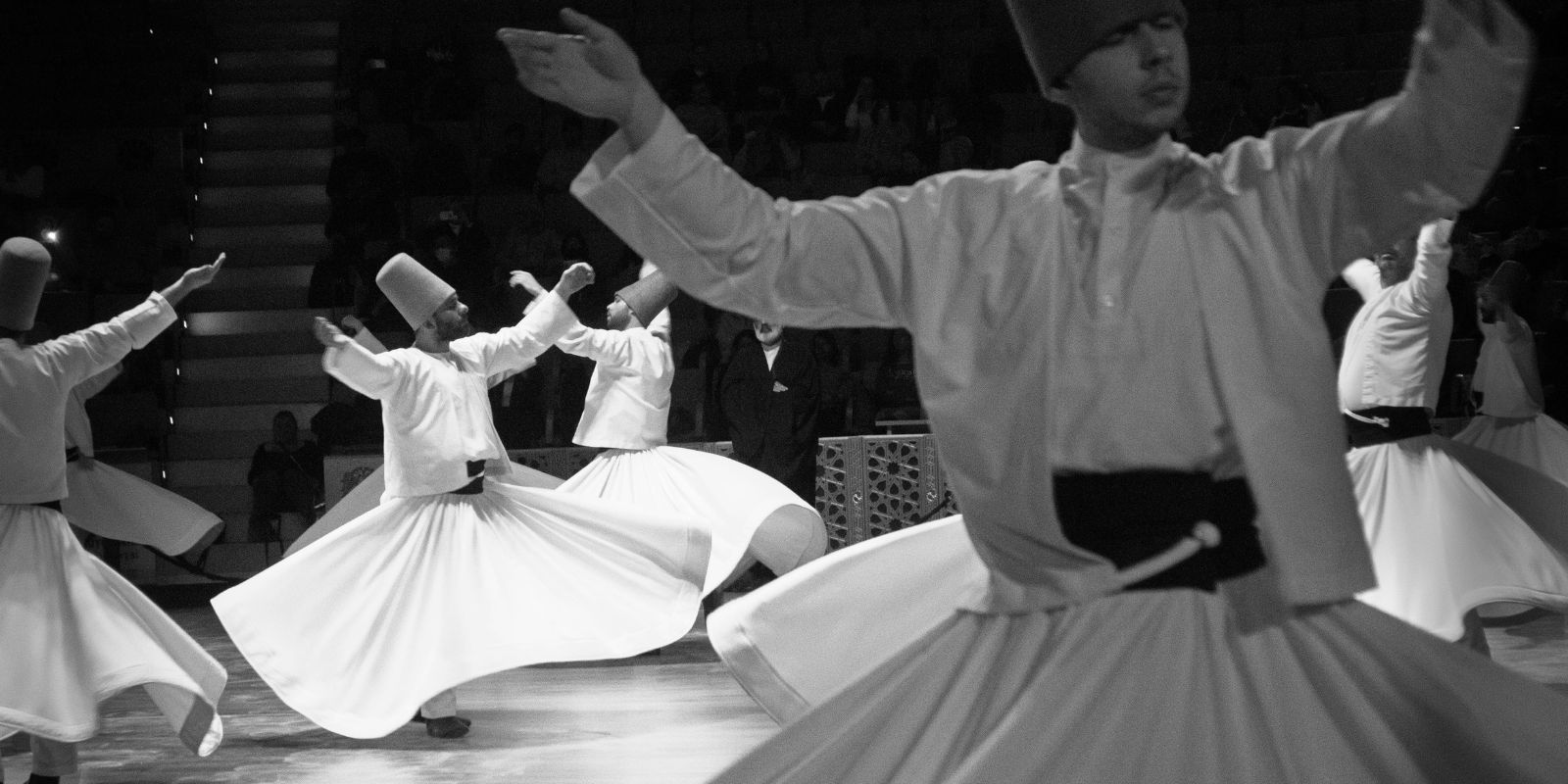
Black is a symbol of divine light for the Whirling Dervishes (the service cloth is black, the dance cloth is generally, and depending on the season, white or hazelnut), whereas for the Sufis, it represents the culmination of the initiatory journey, bliss and supreme ecstasy (i.e. the opposite of darkness).
For the Australian Aborigines, black is the color of the earth and of the festival, it is associated with fertility and joy. For the Navajo Indians, the color black has a double meaning; it is threatening by its evocation of darkness but it protects the wearer by conferring invisibility.
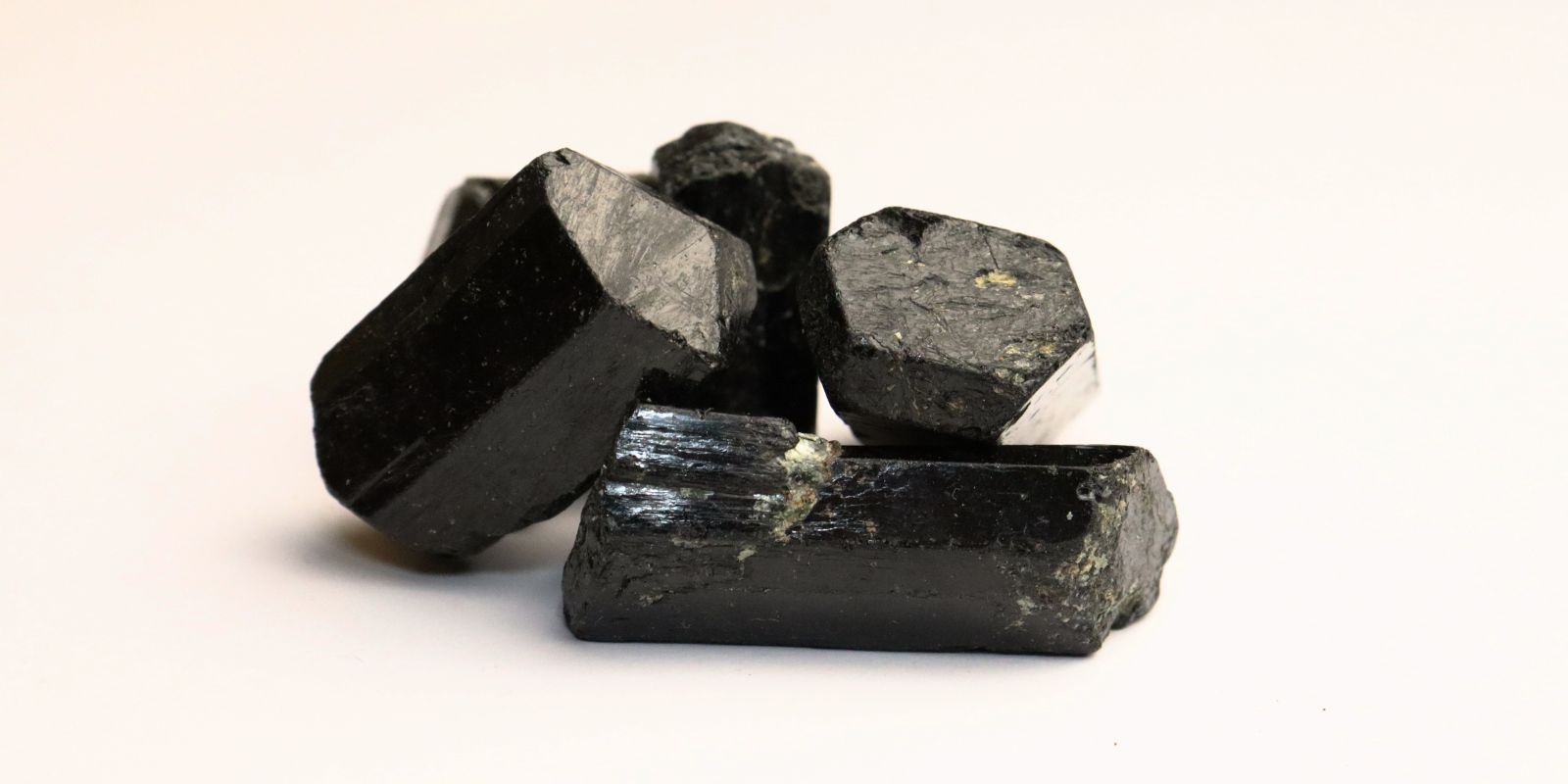
This is not without reminding the use of black stones used in Lithotherapy to protect oneself (obsidian, shungite, tourmaline...). And what about the Kaaba in Mecca, this mysterious black stone whose cult of pagan origin is anterior to the Islamic religion and represents the Anima Mundi. Many black stones called betyls (large black meteorites that fell from the sky) have been considered as sacred stones of worship by many peoples around the world. In their eyes, they represented the presence of a god or deity incarnate on earth.
In shamanism, black is not perceived as a colour but as a state corresponding to ritual nudity. It also symbolizes the renunciation, the abandonment and the stripping of all powers, material goods, ideals and affectivity.... A message that black also addresses to the psyche by asking us to overcome our anxieties and fears fed by the lower mind that binds us to the material and prevents our consciousness from unfolding.
Blackness and symbolic death have long been part of the initiation rites of spiritual aspirants through the ordeal of confinement in a space deprived of light (cellar, cave, teepee, etc.) to confront the inner demons, creations of our unconscious. This ordeal was practiced in Antiquity and then in Egypt, and continues to be perpetrated in Masonic lodges in a more moderate manner. Among several peoples, it also exists as a rite of passage from childhood to adulthood. This phase of reclusion and trial is often difficult to live through. It is likened to a return to the original womb of Mother Earth, where the teachings and mysteries of life are found.
If we look closely, every person who evolves on the spiritual path inevitably goes through this confrontation with his own darkness, before awakening to his own light. A passage from ignorance to knowledge that requires a "killing" of our illusions.
In Egypt, at the time of the Pharaohs, black was a particularly beneficial color that was associated with fertility and rebirth. Representing the underground world, black corresponds to the womb of Mother Earth where the regeneration of the world takes place. In China, black is a yin colour: feminine in nature, it is linked to the curve, to creativity and to the Moon, thus to the night. It is the symbol of nothingness, the great original magma from which everything is born. Darkness of the origins, it precedes the creation in all religions. It is both the beginning and the end.
Black is the color of the unknown, the invisible and the mystery. Everything that exists begins by germinating in darkness before appearing in the light, then returning to nothingness. Nothing escapes this cycle which is at the same time creation, destruction, purification and regeneration.
Black as a clothing colour:
Black can be dramatic but also sophisticated. It reinforces authority and elegance, bringing style and refinement. It is a serious, strong and prestigious colour. In the Middle Ages, black was perceived as virtuous.
Dressing in black is also a way to go unnoticed, to blend in.
"Color rhymes with mood". This is what chromotherapy (colour therapy) teaches us: each colour is associated with a specific type of emotion. Every day we use expressions that reflect the link between a colour and an emotion: laughing yellow, brooding, seeing red, being green with rage, seeing life in pink, being blue with fear, green with hope...
Each colour has its own field of action within our emotional palette.
Like a painter, we choose more or less consciously the colors that correspond to us psychologically both in our living space but also in the daily choice of clothes we wear. We all have clothes, colors that we like to wear simply because we feel good, we feel better dressed so.
If you listen to yourself in the morning before you get dressed, you will naturally feel what colors suit you for this new day. Color is like food for the emotional body. If you feel tired, consciously put on red. You will find that your clothes will give you vitality... and if you don't like red, choose an orange one, it will bring you energy and a joyful, spontaneous side.
This little daily exercise is great for developing your self-awareness. Just ask yourself the question "What color do I need or want to wear today? Over time, you will become more and more sensitive to the influence of color.
The great thing about colors is that they teach us about our psychic and spiritual life.
A bit like the black stones used in lithotherapy that I mentioned earlier, did you know that by dressing in black, you suck in the surrounding energies more easily?
This means that if you are sensitive, and you dress in black, you will tend to capture all the energies, the external atmosphere. And so, instead of protecting yourself, you will expose yourself more
3 reasons why you will never find Black Friday at Mandalashop
1- I don't like black (ahaha)
Basically, I don't really like black, except for coffee or chocolate! (I'll tell you that!).
Colors are life.
Putting colors in your life is not only to favor certain colors in your clothes, in your life or in your workplace. It also means learning to think, to love, to live in colours.
Each thought, each feeling, each desire, corresponds to a color, a vibration, an influence.
2- We are taken for sheep
As a consumer I can understand the interest of wanting to buy certain items cheaper but if we look closer, the consumer society tells us where and when to buy. We lose all capacity to take our life in hand, to make enlightened choices. We just go with the flow.
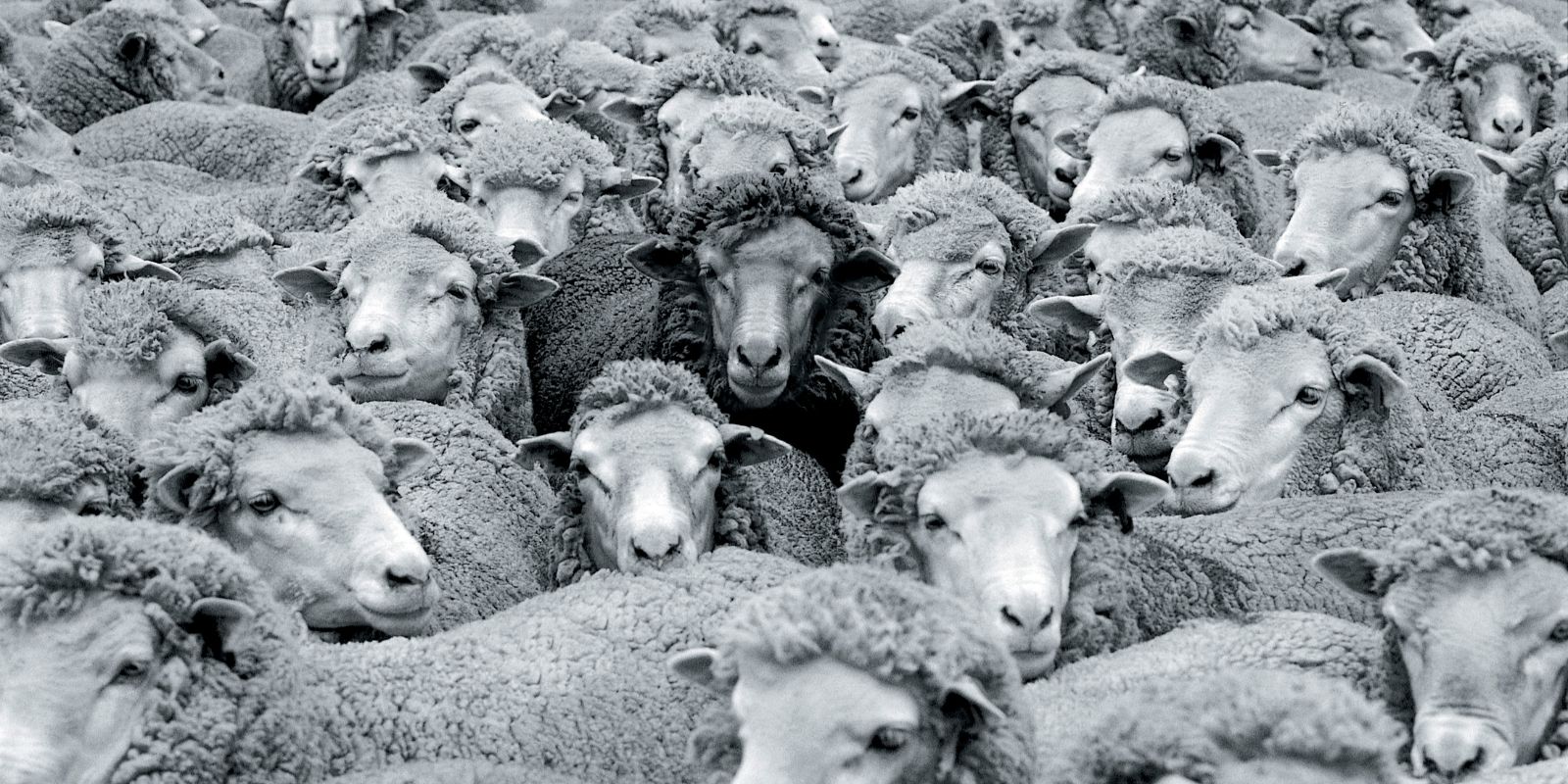
PS: The black sheep is to tell you to dare to be different!
And if we go further, by dint of submitting to the messages that are imposed on us from all sides (radio, newspapers, advertising which is omnipresent), we remain on the periphery of our being. We are manipulated and we are no longer in our center or in our radius.
You know, all the symbols of sacred geometry are there to show us the way to get closer to our own inner center.
I will develop this point in future articles because it is FUNDAMENTAL.
3- We degrade everything
This is similar to the previous point because the essential question we must ask ourselves is: what value do I give to things?This means that if some brands are able to offer discounts of 50% or more on their items, it's because they're making money.
I have nothing against the fact of living from his activity but for a craftsman, who creates articles with his heart and his knowledge, we degrade the work. And that's really what bothers me.
So, to conclude, it' s up to each of us to make a difference and to act with conscience.
Feel free to comment and share this article if you feel like it!
And to stay informed about upcoming articles.


 End of an Era: Are We on the Threshold of a New World?
 Samhain: What Does the Dark Season Really Reveal?
 Viking Symbols: Myths, Mysteries, and Truths
