
Spiritual tattoo: do tattoos really have an effect?

Long reserved for a select few enthusiasts, spiritual tattoos —and, more broadly, tattoos of sacred symbols—have emerged in just a few years as a true social phenomenon. Today, tattoos tell a story, affirm an identity, celebrate an event, or express a deep conviction. Among the most popular designs, spiritual symbols are playing an increasingly important role: the Flower of Life, Metatron’s Cube, the Sri Yantra, the Unalome, the Tree of Life, runes, sigils… These symbols are chosen not only for their aesthetic appeal but also for the meaning attributed to them.
However, tattoos have not always been merely a means of personal expression. In many civilizations, they were a sacred act, performed with full awareness, often as part of a rite of passage, an initiation, or for protective purposes. Each symbol, each design, and sometimes even its placement on the body served a specific purpose.
Today, a new concept is emerging: that of the energy tattoo. Behind this term lies an idea that is resonating with more and more people: can a symbol permanently inscribed on the body exert an influence beyond its mere meaning?
In the world of sacred geometry and form waves, each shape is considered to carry a specific vibrational quality. This perspective naturally invites us to view an energy tattoo as more than just a simple ornament. Unlike jewelry, an object, or a meditation aid that can be removed or replaced, a tattoo is meant to accompany us for many years—sometimes a lifetime.
This article is not intended to dictate which symbols should or should not be tattooed. Rather, it aims to return to the origins of sacred tattooing, explore the traditions that attribute an energetic dimension to it, and offer food for thought on how to choose a symbol mindfully, beyond trends and fads.
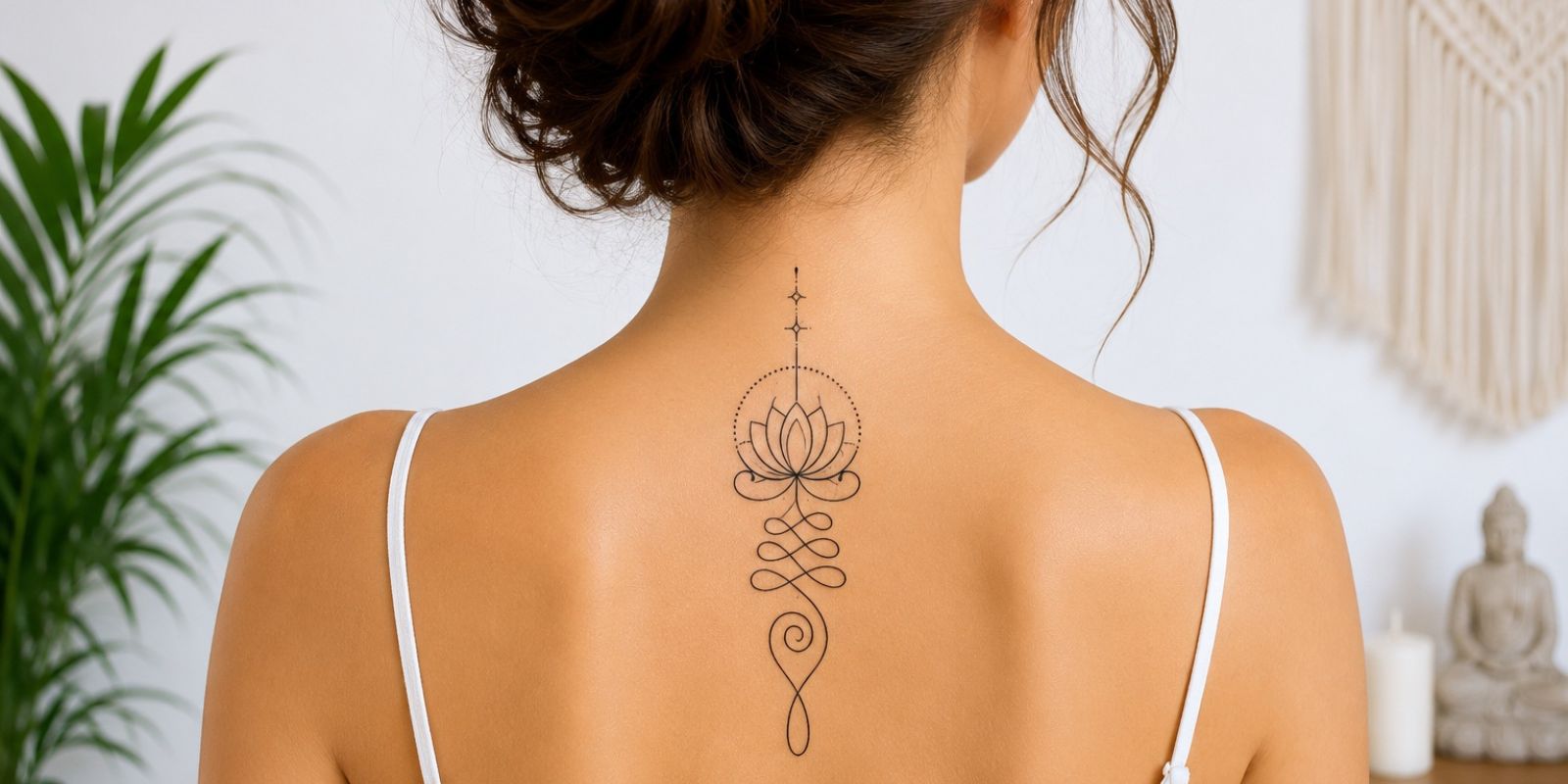
What is the meaning of spiritual tattoos?
The term “spiritual tattoo” is becoming increasingly common, but it does not refer to a single practice or a clearly defined discipline. Depending on who uses it, it can encompass a wide range of approaches.
For some, a spiritual tattoo is a tattoo created with a specific intention: to accompany a life change, strengthen an inner quality, symbolize protection, or mark an important milestone on one’s personal journey.
For others, it is a tattoo depicting a symbol believed to carry a specific energy. This is particularly true of many designs derived from sacred geometry, such as the Flower of Life, the Metatron Cube, or the Sri Yantra, as well as certain symbols from spiritual or esoteric traditions, such as runes, sigils, or the pentacle.
Some practices go even further by incorporating a full ritual into the tattooing process. The tattoo artist’s intention, the mindset of the person being tattooed, the timing, and even the placement on the body are all considered integral parts of the process.
It is thus clear that energy-based tattooing is not based solely on the image etched into the skin. It often combines a symbol, an intention, and a spiritual dimension, the importance of which varies according to traditions and individual sensibilities.
Before exploring these different approaches, it is worth revisiting the origins of tattooing. Long before it became a contemporary trend, it already held an essential place in many civilizations, where it was far from being a mere ornament.
Our Perspective
At Mandalashop, we believe that a symbol should be chosen for its meaning rather than its aesthetics. If we embrace the principle of form waves, a tattoo becomes much more than just a design: it is a symbol we choose to carry with us every day—sometimes for a lifetime. That’s why we believe it’s essential to understand its origin, significance, and message before taking the plunge.
Before exploring the various traditions that attribute an energetic dimension to tattoos, a question arises: why does this topic generate so much interest today?
Why does this question come up so often?
Just a few decades ago, tattoos were still relatively uncommon. Today, they’re a common sight and are popular among people of all ages and backgrounds. At the same time, spiritual symbols are experiencing a real surge in popularity. The Flower of Life, Metatron’s Cube, Sri Yantra, the Tree of Life, runes, and sigils are now widely shared on social media and in tattoo studios.
This popularity has been accompanied by a shift in expectations. Many no longer choose a symbol simply because they find it beautiful. They want to understand what it represents, what it evokes, and, sometimes, the influence it might have on their life’s journey.
This is a question that comes up regularly at Mandalashop. Recently, an Ecuadorian reader, Javi, wrote to us:
“I’ve always wondered if getting tattoos of seals, symbols, sigils, or talismans—along with their symbolism—could have any particular consequences or influence.
Of course, I’m also thinking about getting the tattoo on the most auspicious day, hour, and date to enhance its power.
Does wearing it in a place visible to everyone make a difference? Or is it better to place it on a less exposed part of the body, or even completely hidden?
I would be grateful if anyone had any experience or knowledge to share on this subject. »
His message perfectly sums up the questions we receive: Does a tattoo work solely through its meaning, or also through the energy of the symbol? Does the location on the body matter? Can the timing of getting a tattoo influence this decision? And above all, how do we choose a symbol that will stay with us for a lifetime?
These questions don’t have simple answers. They touch on traditions, beliefs, symbolism, personal experience, and, more broadly, our relationship with symbols. To better understand them, we need to go back to the origins of tattooing, long before it became as widespread a practice as it is today.
Tattoos: A Sacred Act Before They Became a Fashion Trend
When we talk about tattoos today, we often think of them as an artistic, aesthetic, or personal expression. However, this perspective is relatively recent in the grand scheme of human history.
For several millennia, tattoos have been a part of many civilizations. The oldest known evidence dates back more than 5,000 years. The famous Ötzi, discovered in the Alps in 1991 and dated to around 3300 BCE, bore more than sixty tattoos consisting of lines and small crosses. Their location, near painful joints, suggests that they served a therapeutic or ritual purpose rather than an aesthetic one.
Over the centuries, tattooing has developed independently in many regions of the world. While forms and techniques differ across cultures, one common thread emerges: tattoos are rarely mere adornments. They often mark an important life transition, signify a sense of belonging, protect the wearer, or express a special connection to the spiritual world.
Each tradition, however, has its own perspective on tattooing. Exploring a few of these helps us better understand why the question of their potential energetic effects continues to generate so much interest today.
Shamanic Tattoos: A Bridge Between the Visible and Invisible Worlds
The term “shamanic tattoo” is widely used today, though sometimes incorrectly. In reality, there is no single, universal shamanic tattoo. Shamanic traditions are extremely diverse, whether among the peoples of Siberia, Mongolia, the Amazon, or certain Native American populations.
In these cultures, tattoos are often part of a worldview in which everything is alive and interconnected: human beings, animals, ancestors, and the forces of nature. Tattoo designs can symbolize a protective spirit, a totem animal, a rite of passage, or a specific role within the community.
Tattoos therefore derive their power not from the design alone, but from the context in which they are created: the transmission of knowledge, ritual, intention, and the place they occupy in a person’s life journey.
Key takeaway: In shamanic traditions, tattooing is first and foremost a relational act. It expresses a connection to the invisible world rather than merely serving an aesthetic purpose.
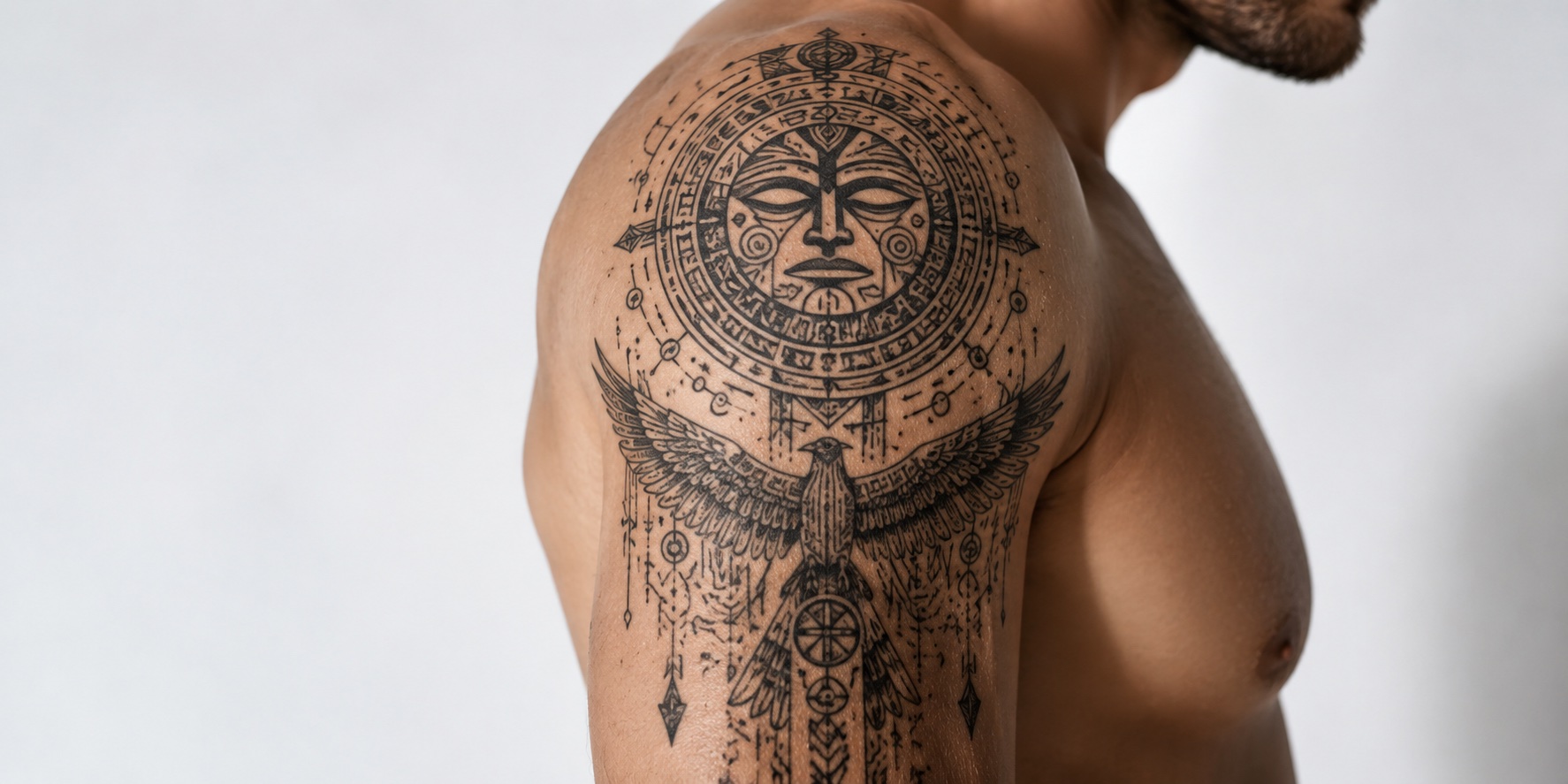
Sak Yant Tattoos: Thailand’s Sacred Tradition
Of all traditions, Sak Yant is undoubtedly the one that best illustrates the contemporary concept of “energetic tattoos.”
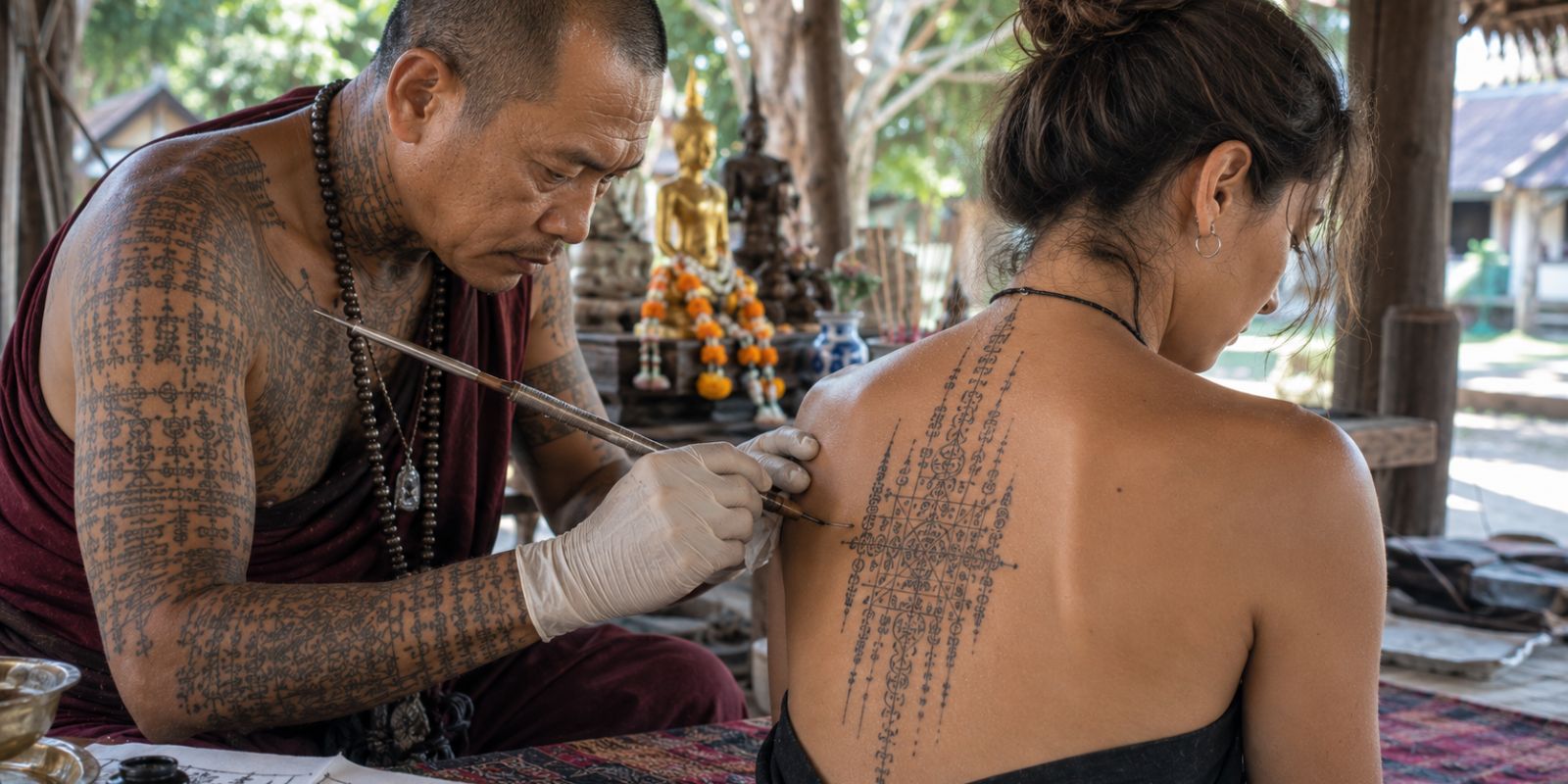
Practiced in Thailand, Cambodia, and Laos, Sak Yant combines geometric figures called yantras, symbolic representations, and sacred formulas in Pali or Old Khmer. These tattoos are traditionally performed by Buddhist monks or masters known as Ajarn.
But the design is only part of the process.
Each spiritual tattoo is accompanied by prayers, blessings, and a ritual intended to “activate” its spiritual power. According to tradition, some Sak Yant promote protection, while others foster courage, compassion, prosperity, or self-confidence. In return, the recipient is often expected to follow a set of ethical rules or precepts.
In other words, the effectiveness attributed to Sak Yant never rests solely on the symbol engraved on the skin. It results from the combination of the design, the ritual, the intention, and the person’s behavior.
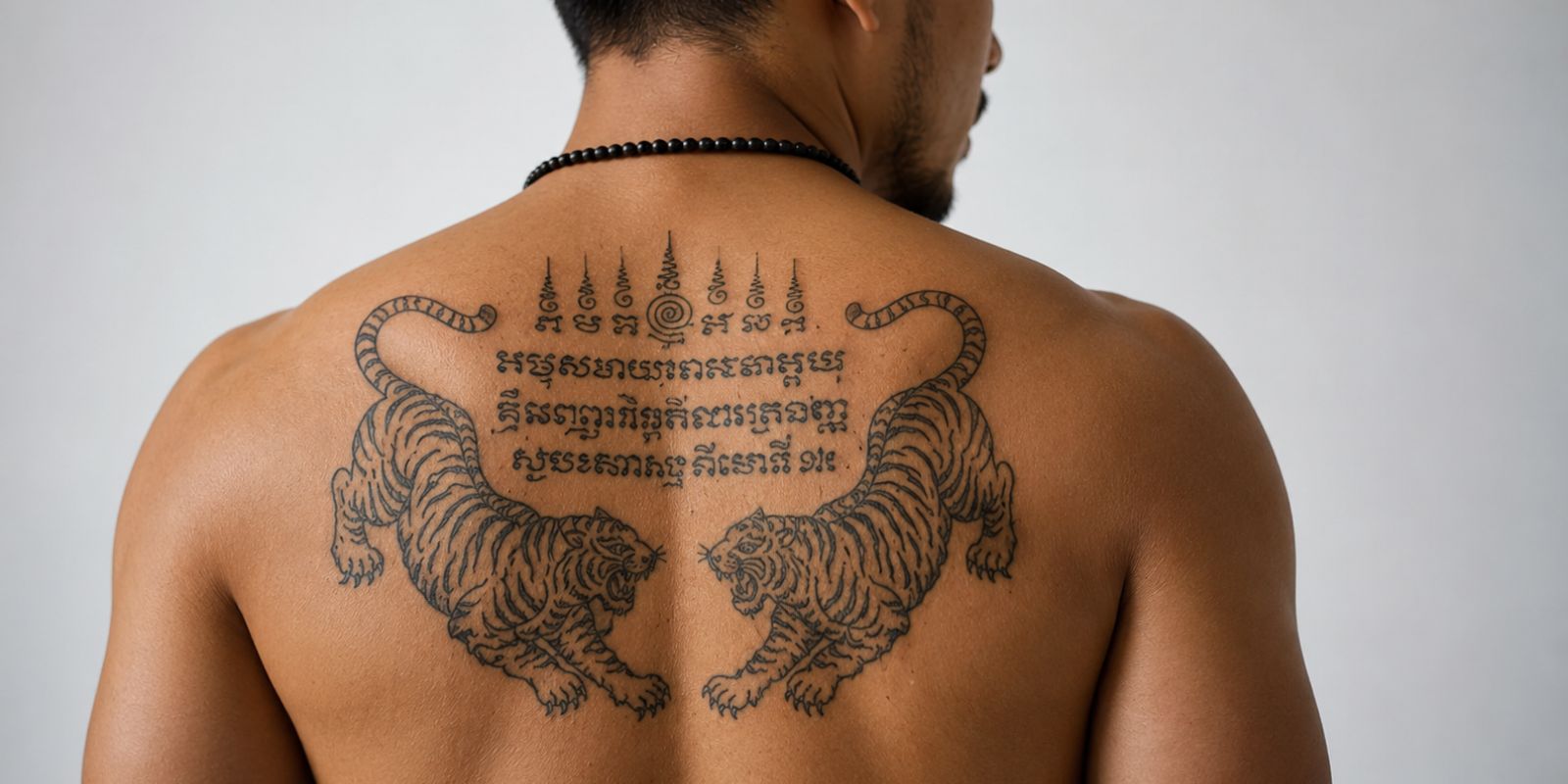
Maori Tattoos: Identity Etched into the Skin
In New Zealand, the tā moko plays a central role in Māori culture.
Contrary to the image often portrayed in the West, it is not simply a graphic style that anyone can freely reproduce. Each spiritual tattoo tells a deeply personal story: ancestry, social status, responsibilities, family alliances, or major life milestones.
The face, considered particularly sacred, often bears the most significant designs. Every line and every curve serves a specific purpose within a visual language passed down from generation to generation.
Even today, many representatives of Māori culture emphasize that the tā moko cannot be reduced to a fashion trend or a decorative motif, as it is so deeply tied to the identity of the person wearing it.
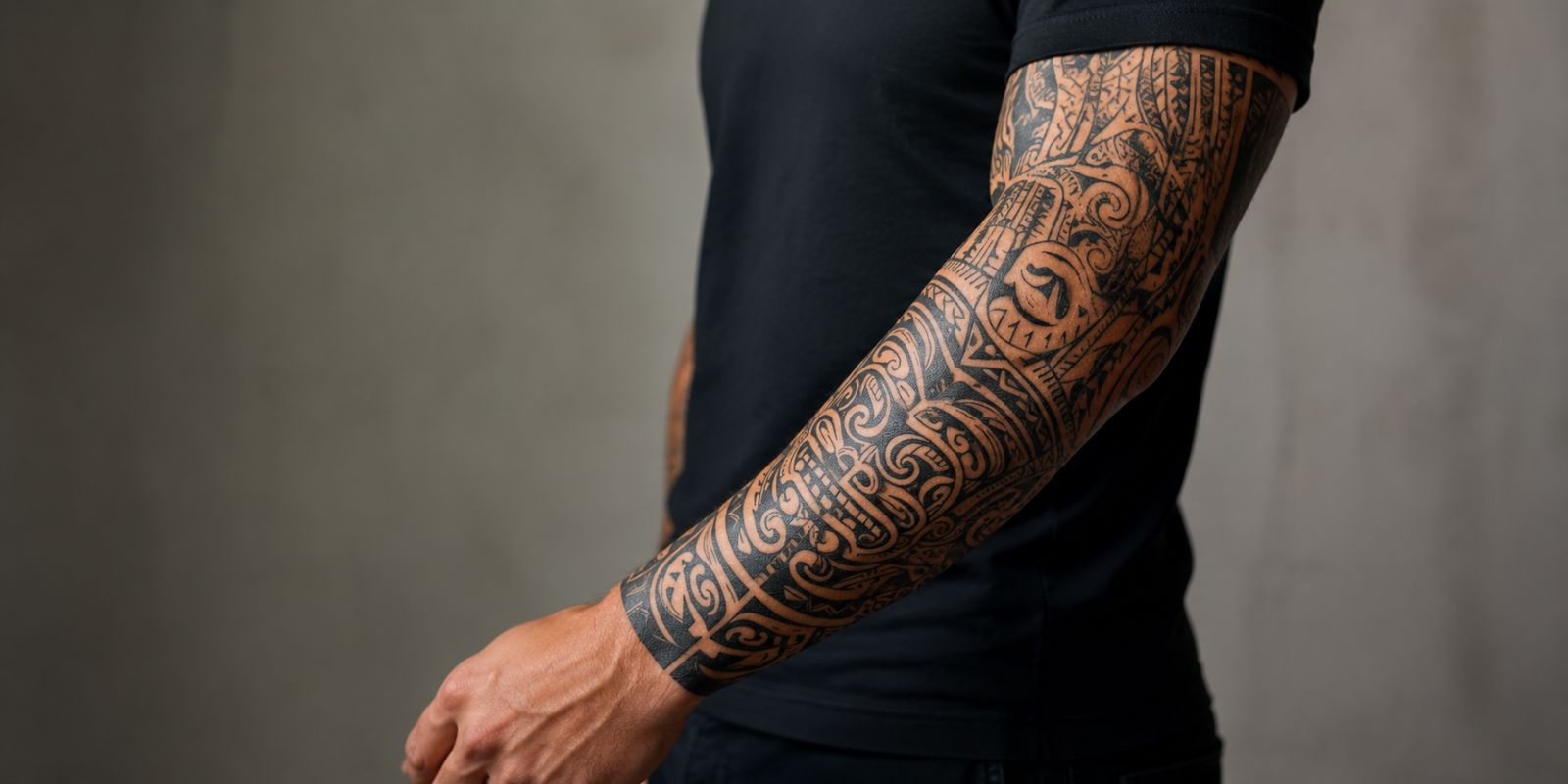
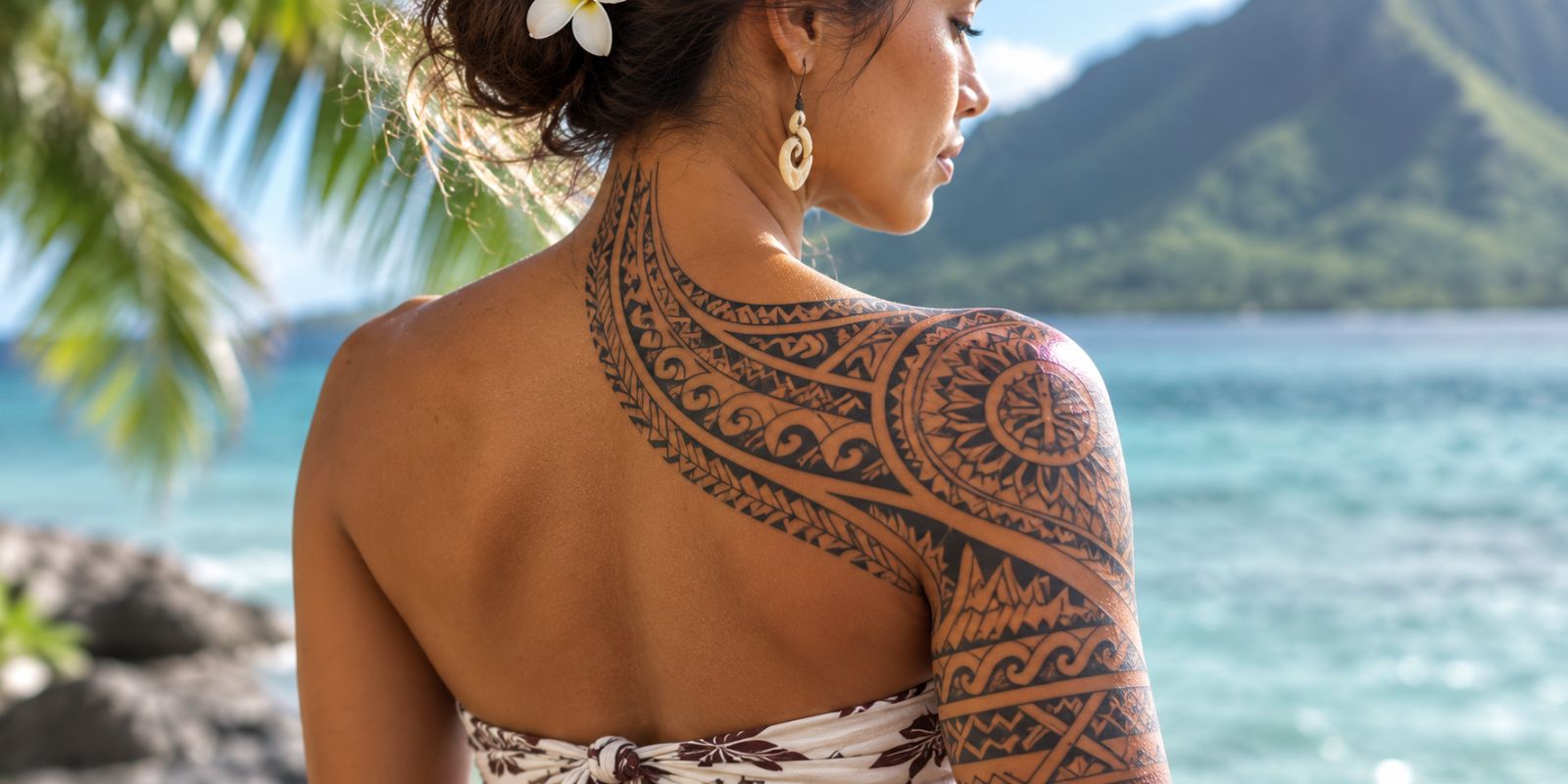
Polynesian Tattoos: A Symbolic Language
Polynesian tattooing shares a strong sense of identity with the tā moko, but it has its own codes.
The designs are built from an extremely rich symbolic vocabulary: the turtle evokes protection and longevity, waves recall the connection to the ocean, spearheads symbolize courage, while the sun can represent life, abundance, or renewal.
Taken individually, each element already has its own meaning. But it is their combination that conveys the tattoo’s true message—like a story written on the skin.
Berber Tattoos: Protection, Transmission, and Belonging
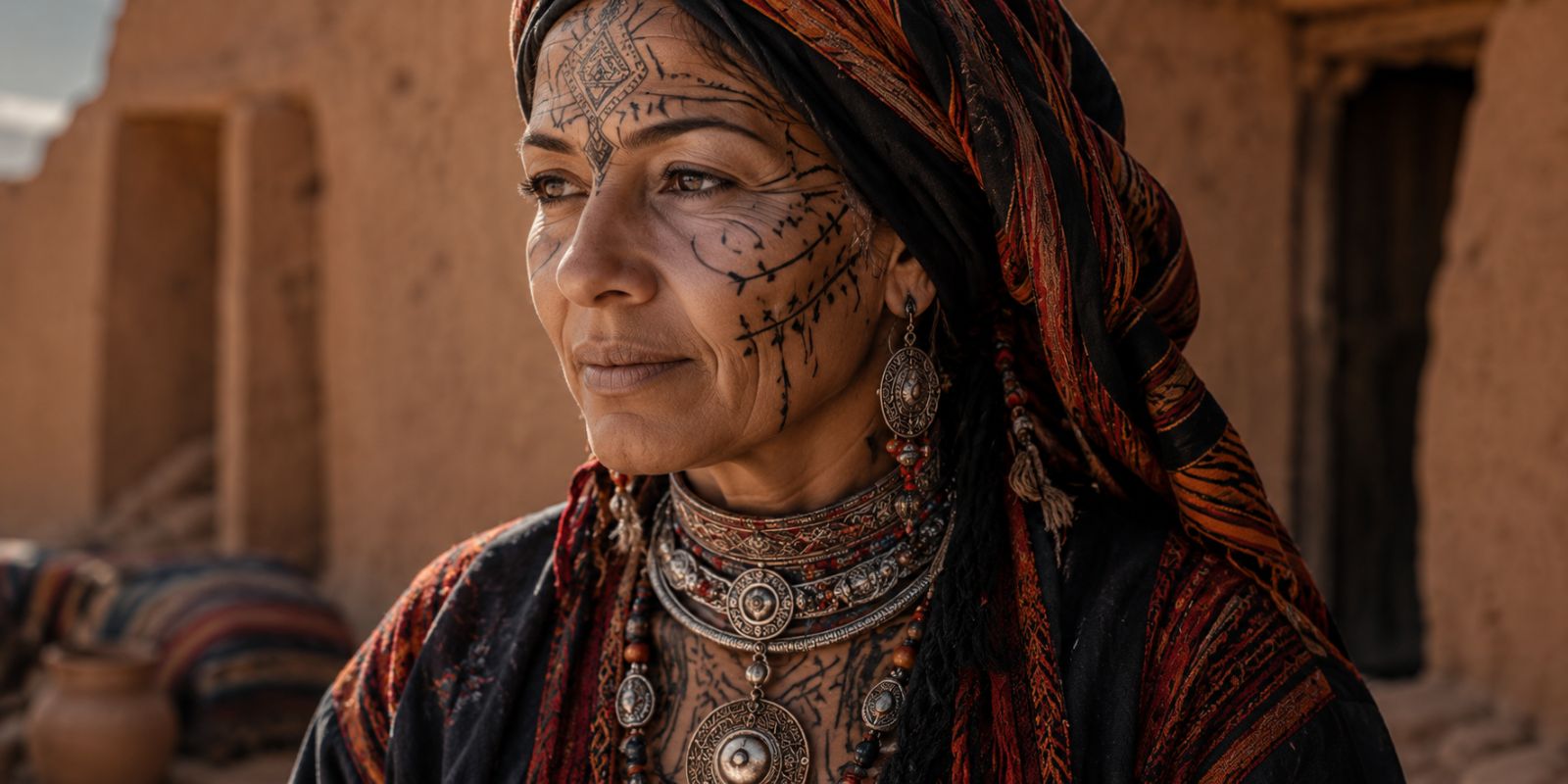
Long practiced in North Africa, particularly among the Amazigh (Berbers), tattoos served social, cultural, and spiritual purposes.
They were primarily worn by women and served to mark membership in a community, celebrate certain life milestones, or invoke protection against the evil eye.
The designs, often geometric—diamonds, triangles, crosses, lines, or dots—were part of a symbolic language passed down within families. They were sometimes associated with fertility, prosperity, or the protection of the home.
A Legacy That Invites Reflection
These few examples show that, for millennia, tattooing was almost never a trivial act. Behind each design lay a story, a belief, a tradition, or a commitment.
Today, sacred symbols are widely shared on the Internet and social media. They appeal not only for their aesthetic appeal but also for the depth of their meaning. The Flower of Life, Metatron’s Cube, Sri Yantra, Tree of Life, runes, and sigils are now tattooed far beyond the cultures from which they originated.
There is nothing inherently negative about this trend. It simply invites us to return to an approach that already existed in ancient traditions: taking the time to understand a symbol before permanently inscribing it on one’s body.
Spiritual Symbols: The True Heart of Energy Tattooing
As we’ve explored these traditions, one thing becomes clear: what gives a tattoo its unique significance isn’t the ink beneath the skin, but the symbol it represents.
Whether we’re talking about shamanic tattoos, Thai Sak Yant, Māori tā moko, or Polynesian designs, the design is never chosen at random. Every line, every shape, and every motif is rooted in a tradition, tells a story, or conveys a specific intention. The tattoo thus becomes the visible medium for a much broader symbolic language.
This observation naturally leads us to another question: if the spiritual symbol is at the heart of the tattoo, can it, on its own, carry an energetic quality?
Symbols: Much More Than Just Drawings
Since time immemorial, human beings have used symbols to represent what cannot be expressed by words alone. They convey ideas, beliefs, forces of nature, life cycles, and even spiritual principles.
Certain shapes have endured across centuries and civilizations. The circle evokes unity and infinity. The triangle is associated with balance or elevation. The spiral recalls the movement of life and growth. These geometric shapes can be found in sacred architecture as well as in spiritual traditions around the world.
When we choose to wear a spiritual symbol, we are choosing much more than just a decorative motif. We are choosing a language, a story, and a meaning that will accompany us in our daily lives.
Form Waves: Another Way of Looking at Symbols
In the world of sacred geometry, one approach goes even further: that of form waves.
According to this theory, every geometric shape emits its own unique vibrational information. This vibration is said to depend not on the material from which the symbol is made, but on its geometry itself. This is why a Flower of Life engraved on wood, printed on canvas, or drawn on a sheet of paper would retain the same fundamental properties, even though their intensity or perception may vary depending on the medium.
We’ve dedicated an entire article to this topic, which we invite you to explore if you’d like to delve deeper into waveforms.
From this perspective, symbols are not merely illustrations. They are considered structures that carry specific information and are capable of interacting with their environment.
A spiritual tattoo, a symbol you wear all the time
This is precisely where the discussion gets interesting.
Unlike a pendant that can be removed, a decoration that can be moved, or a meditation aid used only occasionally, a tattoo is always there. It accompanies the person day after day, sometimes for their entire life.
If we consider that spiritual symbols possess a vibrational quality, then this permanence takes on an entirely different dimension. The choice of symbol is no longer merely a matter of aesthetic preference or a passing trend: it becomes a lasting commitment to a symbol and what it represents.
This is obviously not to say that a tattoo will automatically transform the life of the person who wears it. However, it seems reasonable to question the meaning of a symbol intended to accompany us for decades.
An Invitation to Make a Conscious Choice
This, in fact, is the point that strikes me as essential.
Today, many sacred symbols are reproduced simply because they are visually appealing or very popular on social media. Yet each one has a history, a cultural context, and a meaning that go far beyond their aesthetic appeal.
Before getting a Flower of Life, a Metatron Cube, a Sri Yantra, or any other spiritual symbol tattooed, taking the time to understand its origin and significance seems to me to be a matter of common sense.
Not because there is a list of “good” or “bad” symbols, but because a tattoo is a choice that lasts a lifetime. Even more so than a piece of jewelry or a symbolic object, it becomes a permanent presence in our daily lives.
In my view, it is this permanence that warrants careful consideration. If a symbol is chosen consciously, in alignment with one’s values and personal journey, it naturally takes on a much deeper meaning than that of a simple design.
But the symbol, as powerful as it may be, is perhaps only part of the equation. In most traditions, the person’s intention, the ritual surrounding the tattoo, and the way the symbol is experienced in daily life also play an essential role.
Does intention change the meaning of a tattoo?
When we explore the spiritual traditions surrounding tattoos, one element stands out with remarkable consistency: the symbol, however important it may be, is never enough on its own.
A spiritual tattoo finds its full meaning in the intention behind it. It is part of a specific moment in life, a personal or spiritual journey, and sometimes even a true ritual. This dimension is essential, as it reminds us that a tattoo is not merely a design etched into the skin. It is also an expression of a choice, a commitment, or an inner transformation.
Even today, many people choose a tattoo to mark a new beginning, overcome a challenge, honor a loved one, affirm a value, or accompany a personal journey. The symbol then becomes a permanent reminder of that intention.
Spiritual Tattoos as a Conscious Choice
In Western societies, it’s not uncommon to choose a tattoo simply because we like the way it looks. That’s a perfectly legitimate choice.
But when it comes to a sacred symbol or a design believed to possess energetic properties, the decision takes on a whole new level of depth.
In many traditions, getting a spiritual tattoo is preceded by a period of preparation. The person knows why they are receiving this symbol, what it represents, and what they wish to integrate into their life. The tattoo does not create this transformation; it becomes a witness to it.
This distinction is important. The symbol accompanies an intention that is already present. It does not replace inner work or personal growth.
The Role of Ritual in Traditions
The best example is undoubtedly that of Sak Yant in Thailand.
Before receiving a tattoo, the person speaks with the master, explains their intentions, and receives a symbol tailored to their situation. The tattooing process is accompanied by prayers, mantras, and a blessing. Once the ritual is complete, the recipient often commits to upholding certain principles in life.
In this context, the tattoo cannot be separated from the ritual that gives it life.
This idea is found, in various forms, in other cultures as well. A spiritual tattoo marks a rite of passage, a transformation, a sense of belonging, or a responsibility. It is never a trivial act.
Does the timing matter?
This question comes up regularly, as evidenced by a comment from Javi, one of our readers:
“Can the day, time, or date of a tattoo enhance its power? ”
There is no universal answer to this question.
Some traditions take specific cycles into account: phases of the moon, religious calendars, rites of passage, or key moments in life. Others attach no importance to the date but prioritize the person’s inner preparation.
Beyond these differences, one idea often comes up: a tattoo takes on greater meaning when it corresponds to an important milestone in our lives. A life change, a recovery, a birth, a commitment, or a moment of self-realization can thus give the symbol a very special resonance.
So perhaps it’s not the date itself that matters most, but what it represents to the person getting the tattoo.
Does the placement of the spiritual tattoo have any significance?
Javi also wondered about the placement of the tattoo: is it better to wear a symbol that’s clearly visible or to keep it on a more discreet part of the body?
Here again, the answers vary depending on tradition.
Some energy-based approaches establish a connection between different areas of the body and certain symbolic or spiritual functions. Others believe that a visible symbol radiates more outwardly, while a more intimate tattoo supports a personal journey.
To date, no tradition has reached a consensus on this subject, and it would be simplistic to claim that one location is better than another.
On the other hand, choosing where to have a symbol tattooed can be a deeply meaningful process. A tattoo near the heart will convey a different meaning than a symbol on the wrist, back, or nape of the neck. The placement, then, becomes a form of expression in its own right.
A Symbol Chosen with Care
Throughout this article, one idea keeps coming up: a spiritual symbol is never entirely neutral.
Whether we attribute energetic, spiritual, psychological, or simply personal significance to it, it accompanies the person who wears it and often ends up becoming part of their story.
That is why I believe it deserves to be chosen with the same care that ancient traditions accorded it—not out of fear of making a mistake, but out of respect for what it represents.
Asking ourselves why a symbol appeals to us, what it truly means, whether we’ll still identify with it in ten or twenty years, or whether it deeply resonates with our life’s journey is, in itself, a way of giving it its full value.
Choosing a symbol is also like choosing a companion on your journey
Tattoos are more accessible today than ever before. Yet behind every symbol often lies a history dating back centuries, sometimes even millennia.
The traditions we’ve explored remind us that getting a tattoo was not a trivial act . It marked a life milestone, expressed a sense of belonging, or accompanied a spiritual journey. More than the tattoo itself, it was the symbol that took center stage.
Everyone is free to believe—or not—in the concept of form waves and the idea that a symbol can exert a subtle influence. But one thing is certain: a symbol is never entirely neutral. It conveys a history, a culture, values, and a meaning that go far beyond its graphic appearance.
That’s why, before getting a sacred symbol tattooed, I believe it’s essential to take the time to discover it, understand it, and sense whether it truly resonates with our personal journey. Because a tattoo doesn’t just stay with us for a few months or a few years. It becomes a daily presence, sometimes for a lifetime.
Ultimately, the real question may not be whether a tattoo has an energetic effect. The question is rather what message we choose to permanently inscribe on our skin… and in our lives.
And you—how do you choose the symbols that accompany you? Have you ever considered getting a tattoo for its meaning rather than its aesthetics? Or do you already wear a sacred symbol that holds special significance in your life?
Feel free to share your experience or perspective in the comments. Traditions, life journeys, and sensibilities are diverse, and it’s this very diversity that makes this topic so fascinating.
Sources and References
Books
• Alfred Gell, Wrapping in Images: Tattooing in Polynesia, Oxford University Press, 1993.
• Lars Krutak, Spiritual Skin: Magical Tattoos and Scarification, Edition Reuss, 2012.
• Lars Krutak, The Tattooing Arts of Tribal Women, Bennett & Bloom, 2017.
• Steve Gilbert (ed.), Tattoo History: A Source Book, Juno Books, 2000.
• Carl Gustav Jung, Man and His Symbols, Robert Laffont, 1968.
Institutional and scientific resources
• Studies on Ötzi, the Iceman, published by the South Tyrol Museum of Archaeology (Bolzano, Italy).
• UNESCO resources on Māori cultural heritage and indigenous traditions.
• Publications from the International Agency for Research on Cancer (IARC) regarding ongoing research on tattoos and their effects biologiques.Junko Therese Takamori on Sak Yant and Thai tradition.



 Samhain: What Does the Dark Season Really Reveal?
 Viking Symbols: Myths, Mysteries, and Truths
 Spiritual tattoo: do tattoos really have an effect?

Mandalashop - 08/16/2026 08:46:49
¡Muchas gracias, Javi, por tu mensaje! Me alegra mucho saber que el artículo te ha resultado interesante y que ha podido aclarar algunas de tus dudas. Tus preguntas fueron precisamente las que me animaron a profundizar en este tema, así que ha sido un placer poder compartir esta reflexión. Y no dudes en plantear otras cuestiones si algún tema despierta tu curiosidad, ¡quizás inspires un próximo artículo! ? Y gracias por la aclaración: ¡un saludo desde Francia hasta Ecuador!
Javi - 08/16/2026 06:16:53
Quiero agradecerte profundamente por el artículo tan lleno de información valiosa y por el tiempo que has empleado en desarrollarlo y en aclarar mis dudas. Me gustan mucho los temas que llevas a cabo y como los abordas. Si tengo otra inquietud te la haré saber jaj.. Una pequeña aclaración: Soy de Ecuador saludos desde esta parte del mundo.