
End of an Era: Are We on the Threshold of a New World?

Wars, violence, political tensions, social divisions, economic crises… All over the world, conflicts are dragging on, anger is simmering, and certainties are wavering. Every day brings its share of disturbing news, to the point where we sometimes find ourselves wondering just how far this downward spiral might take us.
And yet, humanity has never had so much knowledge, technological resources, and capacity to transform its environment.
What a strange contradiction: we are capable of exploring the far reaches of the universe, yet we still struggle to live in peace on our own planet!
We have learned to master matter, to push the boundaries of science, and to communicate instantly across the globe. But have we made progress with the same determination in the way we live together? In our ability to transcend rivalries, power struggles, and that desire for domination that continues to fuel so many conflicts?
As early as the beginning of the 20th century, the philosopher Henri Bergson raised the question of the imbalance between our technological power and our moral development. Nearly a century later, this question takes on a disturbing resonance.
What if our civilization has become technically all-powerful, yet spiritually disoriented?
This question leads us to another, even more dizzying one: are we simply witnessing a succession of crises, or the end of a civilizational cycle?
In many spiritual traditions, human history is not viewed as an infinite progression, but as a succession of cycles marked by periods of growth, decline, and renewal.
The teachings of René Guénon, Peter Deunov, and Omraam Mikhaël Aïvanhov invite us to explore this perspective, without claiming to predict the future.
For beyond the upheavals of the world, one question remains essential: how can we navigate these troubled times without losing our discernment, our humanity, and our inner balance?
A World Under Strain: Signs of a System on the Threshold
All over the world, tensions are mounting. Deadly wars, humanitarian crises, social divisions, distrust of institutions… Conflicts are dragging on, power struggles are intensifying, and entire populations are paying the price for decisions beyond their control.
In France, as elsewhere, economic anxieties and protest movements reflect a deep-seated unease. But beyond the difficulties of daily life, a troubling question arises: Does our model of civilization still serve the interests of humanity, or those of a minority that holds power and wealth?
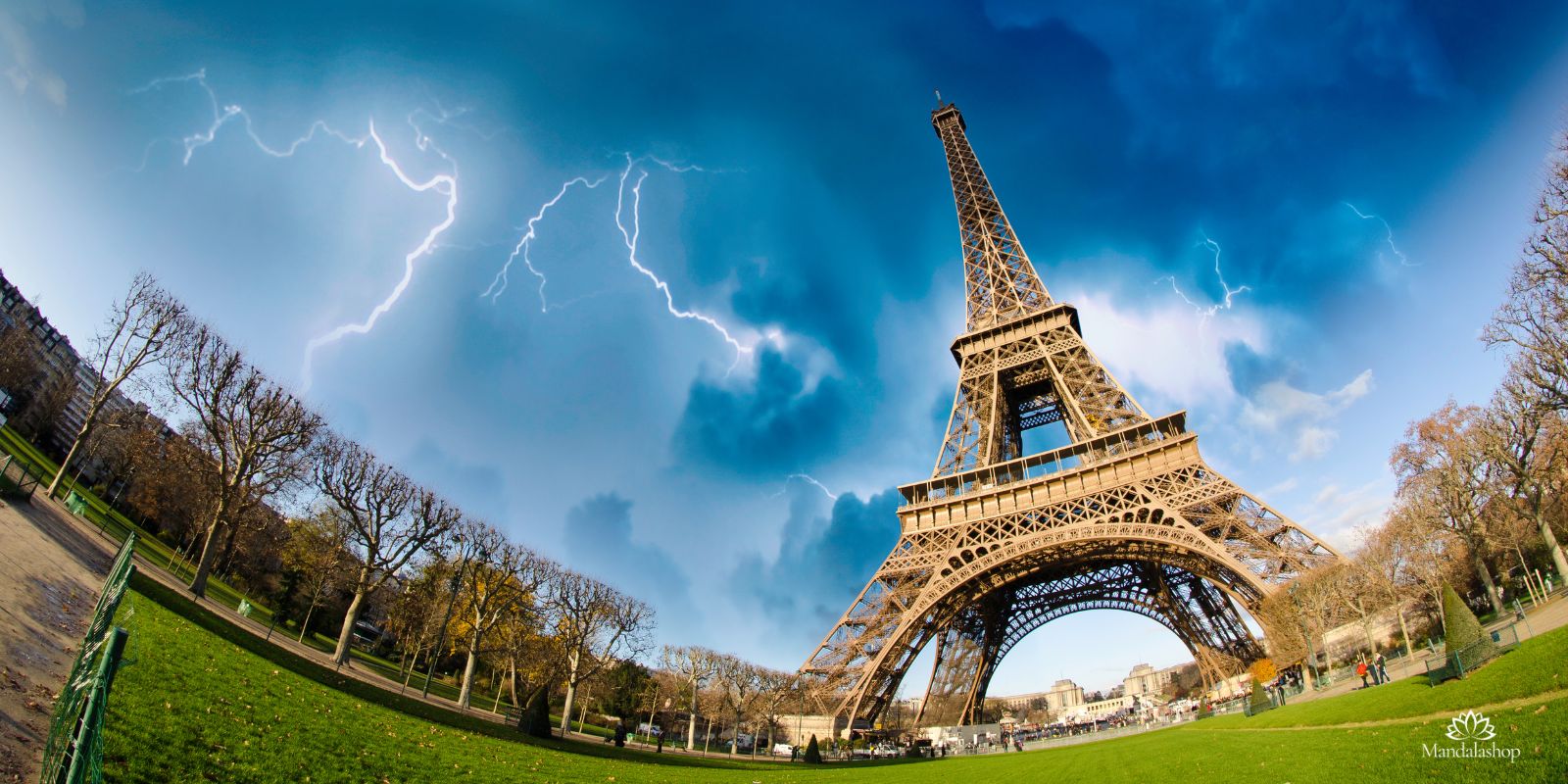
Who Benefits from War?
Behind the rhetoric about security, defense, and national interests lies a significant economic reality: war is a human tragedy, but it also represents a colossal market.
According to the Stockholm International Peace Research Institute (SIPRI), global military spending reached $2,887 billion in 2025. The 100 largest arms and military services companies, for their part, generated $679 billion in revenue from these activities in 2024.
These figures do not prove that industrialists cause wars. But they serve as a reminder that conflicts and rearmament involve considerable economic and strategic interests.
How can we make peace a priority when preparing for war generates such significant financial stakes?
Because behind every conflict, it is legitimate to ask: Who makes the decisions, who bears the consequences, and who profits from them?
Is technological progress enough to advance humanity?
Meanwhile, we are developing ever more powerful artificial intelligence, exploring the universe, and pushing the boundaries of science. Yet we remain unable to guarantee peace, security, or dignified living conditions for all human beings.
It would be unfair to deny the progress that has been made. But what a strange civilization it is—one that perfects its technologies faster than it can overcome its own violence!
What if the crises we are facing ultimately reveal something deeper than political or economic turmoil: a civilization that has become extraordinarily powerful, yet struggles to give that power a human meaning?
Why does our society seem to have lost its way?
We live in a society that knows how to produce more and more, but seems to be finding it increasingly difficult to define what is truly worth pursuing.
Growth has become a necessity, performance a virtue, and consumption a promise of happiness. We work to earn more, consume to reward ourselves, and start all over again, caught up in a race whose destination we rarely question.
At what point did we begin to measure the success of a civilization by its ability to produce wealth rather than by its ability to enable human beings to live with dignity?
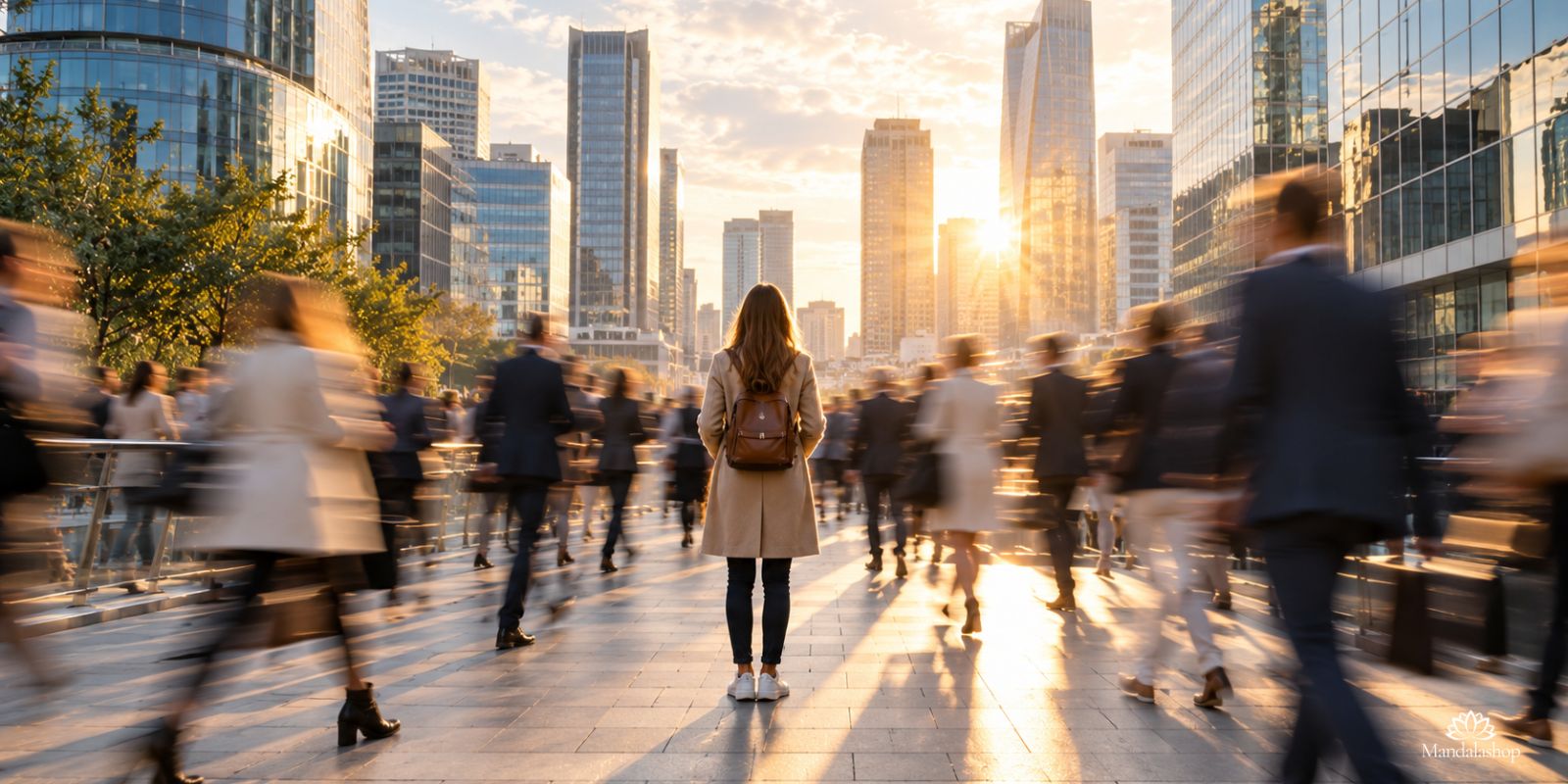
Faster and faster—but where are we headed?
Everything must be immediate: information, answers, results, satisfaction. We are constantly being solicited, connected, and urged to react, compare, and consume.
And while our tools are supposed to save us time, how many of us actually feel like we have more of it?
We’ve learned to fill our days, but do we still know how to give meaning to our lives?
This constant hustle leaves little room for silence, contemplation, and the inner reflection that allows us to distinguish our true aspirations from the expectations society projects onto us.
Can a civilization survive the loss of its values?
As early as the 19th century, the philosopher Friedrich Nietzsche was already examining the consequences of the collapse of traditional values. His reflections on nihilism describe, in particular, the risk of an existence devoid of reference points and purpose.
Nearly a century and a half later, this question retains particular relevance: what becomes of a society when it no longer knows exactly what it is striving for?
We have extraordinary means at our disposal to transform our environment, but no innovation, on its own, can tell us what is worthy of love, respect, or preservation.
Perhaps our era confronts us with this fundamental contradiction: we have developed considerable power over the external world, without always cultivating the wisdom necessary to guide ourselves internally.
What if the crisis we are going through is also a crisis of the meaning we give to our existence?
The End of a Cycle in Spiritual Traditions
What if the crises we are facing were not merely the consequences of political or economic decisions, but symptoms of a deeper upheaval?
In many spiritual traditions, time is not viewed as an infinite progression, but as a succession of cycles. Like the seasons, each period experiences a birth, a development, a decline, and then a renewal.
The end of a cycle therefore does not necessarily mean the end of the world, but may mark the collapse of a way of thinking, living, and organizing society.
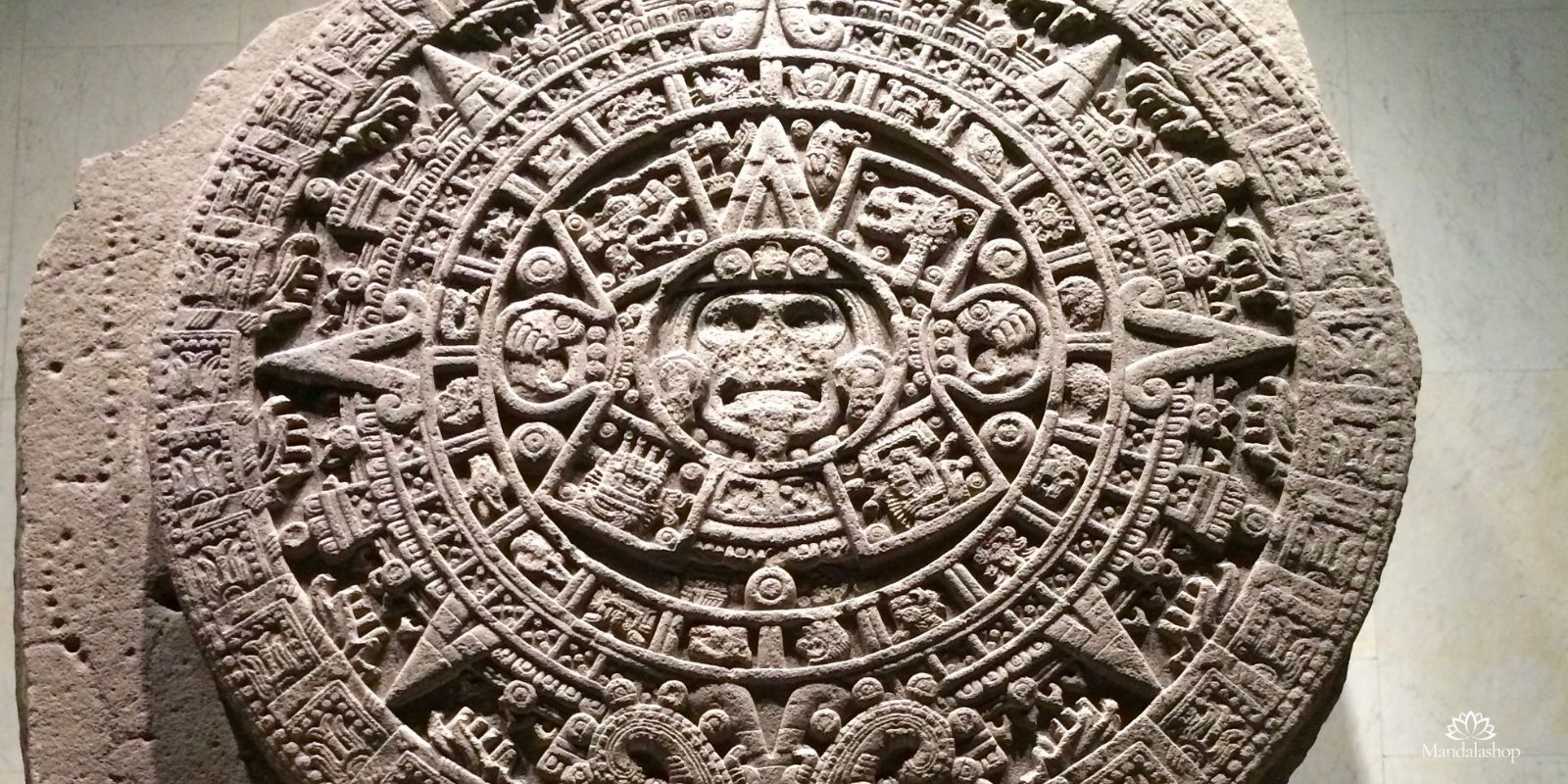
The Kali Yuga: Are We Living Through the End of an Age?
In Hindu cosmology, humanity passes through four great ages, called Yugas. The last, the Kali Yuga, is traditionally associated with a weakening of dharma—the moral and cosmic order—as well as with increasing confusion and division.
In The Crisis of the Modern World (1927), René Guénon draws a parallel between this cyclical conception and modern civilization. According to him, the crisis of our time is not merely political, social, or economic: it stems from a gradual drift away from spiritual principles.
In The Reign of Quantity and the Signs of the Times (1945), he expands on this critique of a world where everything tends to be measured in numbers, performance metrics, and material outcomes.
Have we come to confuse what has a price with what truly has value?
Guénon’s thinking is radical: from his perspective, a civilization can multiply its technical achievements while simultaneously experiencing spiritual impoverishment.
Is decline inevitable?
It would be tempting to see the current upheavals as confirmation of this view. But no single contemporary crisis, on its own, can prove that we are living through the end of the Kali Yuga or herald the imminent arrival of a new age.
The value of this reading lies elsewhere: it compels us to question the foundations of our civilization.
What if what is running out of steam today is not humanity itself, but a model that has gradually relegated the spiritual dimension to the background?
Not all traditions, however, view human evolution through the lens of decline. Where Guénon emphasizes the loss of traditional principles, Peter Deunov offers another perspective: that of a humanity capable of bringing forth a new culture founded on love, wisdom, and truth.
What if this period of upheaval were also inviting us to imagine what our collective consciousness might become?
Toward a Transformation of Collective Consciousness?
We talk about peace, yet we continue to spend vast sums on weapons. We celebrate solidarity, yet economic interests and rivalries between powers often take precedence over the common good. We defend human rights, yet struggle to ensure they are respected everywhere.
How can we hope to build a more just world if the values we proclaim are so often contradicted by our actions?
Yet certain spiritual teachings envision another possible path for humanity’s evolution. This is particularly true of Peter Deunov (1864–1944), a Bulgarian spiritual master also known as Beinsa Douno.
Peter Deunov and the New Culture of Love
At the heart of his teaching lies the advent of a New Culture of Love, founded on three essential principles: Love, Wisdom, and Truth.
For Deunov, love is not merely a feeling. It is a universal principle capable of transforming our relationship with others and with life. Wisdom invites us to understand the consequences of our actions, while truth urges us to live with greater awareness and authenticity.
This new culture requires moving beyond a conception of existence dominated by competition, separation, and the exclusive pursuit of self-interest.
But are we truly ready to build a world based on brotherhood if that means giving up certain privileges, questioning our habits, and acknowledging our responsibility toward others?
Can a new consciousness emerge from chaos?
From Deunov’s perspective, humanity’s evolution does not depend solely on institutions or technological progress. It involves a transformation of human consciousness itself.
It is therefore not simply a matter of replacing one system with another, but of bringing about a different way of thinking, loving, and living together.
This vision may seem idealistic in the face of the violence in today’s world. Yet it raises a fundamental question: Can a civilization truly change if human beings continue to repeat the same patterns of domination, fear, and rivalry?
There is no guarantee that contemporary crises herald the advent of this new consciousness. But Deunov’s teaching invites us to view renewal as a responsibility rather than as a promise that will come to pass on its own.
His disciple, Omraam Mikhaël Aïvanhov, would expand on this reflection by placing fundamental importance on inner work.
For if we wish to see a more harmonious world emerge, must we not begin by examining what we nurture in our own thoughts, words, and deeds?
Returning to One's Center When the World Is in Turmoil
We denounce the wars, injustices, divisions, and power dynamics that permeate our society. But how often do we, on our own level, reproduce the same mechanisms through our judgments, reactions, or words?
We all aspire to a more peaceful world. But are we capable of not fueling anger, hostility, or contempt ourselves when something outrages us?
This contradiction brings us back to an essential aspect of the teachings of Omraam Mikhaël Aïvanhov (1900–1986), a disciple of Peter Deunov: the transformation of the world cannot be completely separated from the work we do on ourselves.

The Center and the Periphery: Rediscovering Our True Point of Support
Aïvanhov uses the image of the center and the periphery to illustrate our relationship to existence.
The periphery represents the activities, concerns, and events that constantly demand our attention. It is there that we work, face difficulties, and react to the upheavals of the world.
The center, on the other hand, symbolizes our connection to the spiritual principles that give direction to our lives. It represents that point of inner unity from which our thoughts, feelings, and actions can regain their coherence.
In his teaching, the point is not to flee from the periphery, but to never lose touch with our center, even in the midst of turbulence.
For when we continually allow ourselves to be swept along by external events, we risk losing our discernment and reacting more under the influence of our emotions than in accordance with our deepest convictions.
Inner peace is not an escape from the world
Returning to one’s center does not mean becoming indifferent to the suffering of others or giving up on speaking out against injustice.
It means learning not to let the violence of the world systematically dictate our own way of thinking and acting.
What is the point of condemning hatred if we, in turn, allow it to take hold of us?
This quest for unity also finds a symbolic echo in sacred geometry. The circle, the mandala, and the Flower of Life invite us to contemplate forms organized around a center, where the various elements contribute to the harmony of the whole.
They can thus serve as tools for meditation, reminding us that beyond the external turmoil, we always have the opportunity to rediscover an inner sense of direction.
And what if, in a world that seems to be losing its center, our primary responsibility were to not lose our own?
What We Nurture Grows: Learning to Protect Ourselves
We’ve never been so well-informed about what’s happening in the world. Wars, disasters, violence, political scandals, economic crises… Bad news reaches us constantly, even during the most private moments of our daily lives.
But does this flood of information really make us more aware, more clear-headed, and better able to take action?
Being informed about everything doesn’t necessarily mean understanding the world. And being outraged by everything doesn’t always mean helping to change it.

When Fear Becomes Part of Our Daily Lives
The media and social media play a vital role in the dissemination of information. However, the way they operate can also favor content that elicits the strongest reactions: fear, anger, outrage, or anxiety.
By being constantly exposed to the same tensions, we risk eventually perceiving the world solely through the lens of conflict.
The danger isn’t just that we feel powerless. It’s also that we allow this constant turmoil to influence the way we think, our relationships, and our vision of the future.
Whom do we empower when we let fear take over our minds?
Choosing What We Nourish Within
In the teachings of Omraam Mikhaël Aïvanhov, thought is not considered a secondary aspect of our existence. It is an integral part of our inner life and, as such, deserves to be cultivated with care and discernment.
This perspective invites us to reflect on what we nurture within ourselves each day.
It is not a matter of denying injustices, repressing our emotions, or turning a blind eye to suffering. Anger can be legitimate and become the starting point for necessary action.
But there is a fundamental difference between becoming aware of an injustice and allowing it to consume all our inner energy.
Staying informed without getting overwhelmed, verifying information before sharing it, choosing reliable sources, limiting unnecessary distractions, and devoting time to what uplifts us: these are all simple steps toward regaining a sense of freedom amid the surrounding turmoil.
Because our attention is not an inexhaustible resource. What we devote our attention to ultimately shapes how we view the world.
What if we devoted as much energy to nurturing what we want to see grow as we do to denouncing what we no longer want?
What if the end of a cycle were also a beginning?
Are we truly at the end of a cycle? No one can say for certain. But one thing seems hard to deny: our civilization is facing contradictions that it cannot ignore forever.
René Guénon invites us to question our drift away from spiritual principles. Peter Deunov opens our eyes to the prospect of a humanity founded on love, wisdom, and truth. Omraam Mikhaël Aïvanhov reminds us of the importance of inner work.
Their teachings differ, but they lead us to a common question: What meaning do we wish to give to our existence, both individually and collectively?
For no “New Age,” no spiritual evolution, and no societal change can relieve us of our present responsibility.
We can continue to wait for the world to change, all the while repeating the very behaviors we condemn. Or we can begin, on our own scale, to live out the values we would like to see prevail.
This alone will not be enough to eliminate wars, injustices, or power dynamics. But it would be a mistake to believe that our individual choices have no bearing on collective progress.
Perhaps the real question isn’t whether a new world awaits us, but whether we’re ready to help build it.
What about you? Do you feel that our society is reaching the end of a cycle? What changes do you think are essential today to envision a more humane future? Share your thoughts in the comments.
We’ve reached the end of this article. I hope you enjoyed it.
Feel free to comment, share, and subscribe to our newsletter to stay informed about upcoming posts.
Sources and References
• SIPRI — Global Military Expenditures in 2025
• SIPRI — The Top 100 Arms Companies in 2024
• Henri Bergson — The Two Sources of Morality and Religion (1932).
• Friedrich Nietzsche — Stanford Encyclopedia of Philosophy
• René Guénon — The Crisis of the Modern World (1927) and The Reign of Quantity and the Signs of the Times (1945).
• Encyclopaedia Britannica — The Four Yugas
• Peter Deunov — Introduction to His Teachings
• Omraam Mikhaël Aïvanhov — The Center and the Periphery, Prosveta Publications
• Omraam Mikhaël Aïvanhov — The Powers of Thought, Prosveta Publications.
• UNESCO — Developing A Critical Mind Against Fake News


 End of an Era: Are We on the Threshold of a New World?
 Samhain: What Does the Dark Season Really Reveal?
 Viking Symbols: Myths, Mysteries, and Truths
