
List of Spirit Animals and Their Meanings

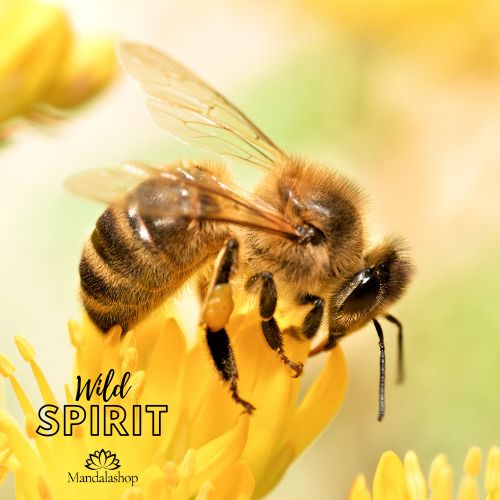
Bee Spirit Animal: Cooperation, Organization, and Abundance
Small in size but essential to the balance of many ecosystems, the bee symbolizes teamwork, perseverance, and fertility.
Its social organization and ability to transform nectar into honey make it a symbol of abundance, creativity, and reward for hard work.
The strengths of the bee: The bee evokes cooperation, a sense of responsibility, and the ability to contribute to a cause that transcends ourselves. It reminds us that the most significant achievements are not always individual.
Its downside: Its ceaseless activity can also make us question our relationship with work. In our eagerness to be useful, productive, or indispensable, do we risk losing sight of ourselves?
Its lesson: the bee invites us to find our place within a group, to recognize the value of our efforts, and to maintain a balance between commitment and rest. It reminds us that a rich life is not measured solely by what we accomplish.
Eagle Spirit Animal: Freedom, Vision, and Spiritual Elevation
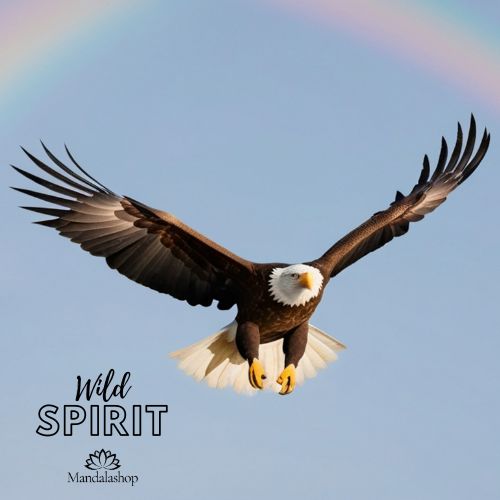
Majestic and powerful, the eagle fascinates with its ability to soar high and traverse vast territories. Featured in many traditions around the world, it is notably associated with the sky, the sun, sovereignty, and the connection between the earthly and spiritual worlds.
In spirit animal symbolism, the eagle represents freedom, clear-sightedness, and the ability to see beyond appearances. Its piercing gaze evokes discernment, while its flight reminds us of the importance of taking a step back to better understand a situation.
The eagle also symbolizes courage, independence, and determination. It invites us to follow our own path, to stand up for our convictions, and to never lose sight of our deepest aspirations.
But this quest for freedom also has its limits. Independence can sometimes turn into isolation, self-confidence into pride, and the pursuit of a broader perspective can make us forget the realities of everyday life.
The eagle’s lesson, therefore, is one of balance between soaring high and staying grounded. It encourages us to broaden our perspective without cutting ourselves off from the world, to trust our vision while remaining attentive to our surroundings.
Its message could be summed up as follows: “Soar high enough to see where you want to go, but never forget what connects you to the earth.”
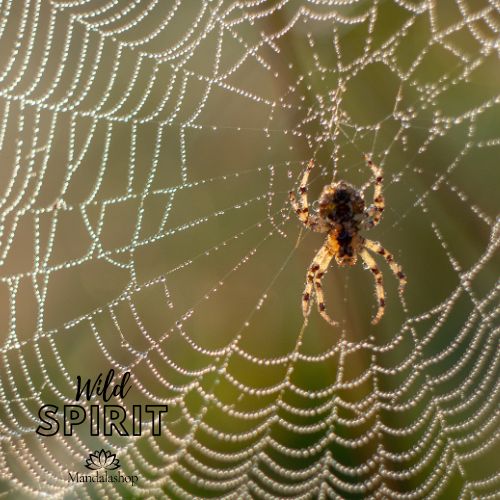
Spider Spirit Animal: Creativity, Patience, and Destiny
The spider is a fascinating architect. With remarkable precision, it weaves its web thread by thread, creating a structure that is both delicate and strong. This ability makes it a symbol of creativity, patience, and the power to shape one’s own destiny.
In many traditions, the spider is associated with weaving the world, storytelling, and the transmission of knowledge. In certain West African cultures, Anansi—a character often depicted as a spider—embodies cunning and intelligence.
The spider spirit animal invites us to become the architects of our own lives. It evokes the ability to connect ideas, give shape to our projects, and move forward methodically, even when the results aren’t immediately visible.
But the web also has a more ambiguous dimension. It can symbolize the traps we set for ourselves, the relationships in which we feel trapped, or our excessive need to control everything.
The spider thus challenges us to reflect on how we build our lives: are we creating freely, or are we imprisoning ourselves within our own demands?
Its lesson is one of creative patience. It reminds us that lasting projects are built gradually, that sometimes we must start over after a failure, and that we have more power over our path than we realize.
Every thread counts, even when the web is not yet complete.
Whale Spirit Animal: wisdom, intuition, and emotional depth
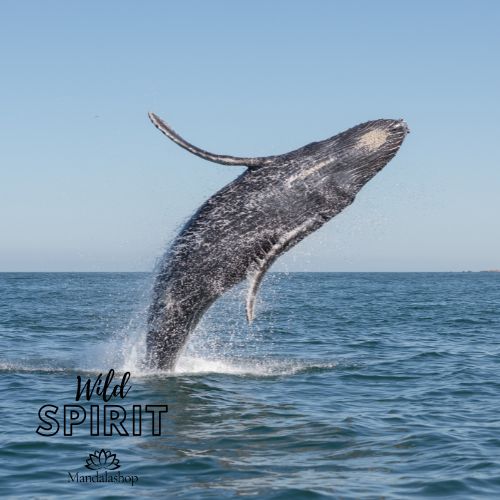
Mysterious and majestic, the whale swims through the vastness of the oceans, a world that humans still do not fully understand. Its impressive size contrasts with the grace of its movements and the richness of its vocalizations, which can travel great distances underwater.
In contemporary spirit animal symbolism, the whale represents inner wisdom, intuition, and deep emotions. It is also associated with memory, transmission, and communication.
The whale invites us to explore what lies beneath the surface: our deep emotions, our memories, and those feelings we sometimes struggle to express. It evokes a form of wisdom that relies not only on reflection but also on listening to oneself.
Its song reinforces this symbolic dimension. It reminds us of the importance of finding our own voice, expressing what we feel, and forming authentic connections with others.
But this sensitivity can also become a challenge. The whale totem animal challenges us to reflect on our tendency to let ourselves be overwhelmed by our emotions, to carry the weight of the past, or to retreat into our inner world.
Just as the whale dives into the depths before surfacing to breathe, its lesson is one of balance between introspection and openness to the world.
It encourages us to embrace our emotions without getting lost in them, to listen to our intuition without cutting ourselves off from reality, and to recognize the value of our own voice.
Exploring our inner depths is valuable—as long as we don’t forget to return to the surface.
Doe Spirit Animal: gentleness, intuition, and sensitivity
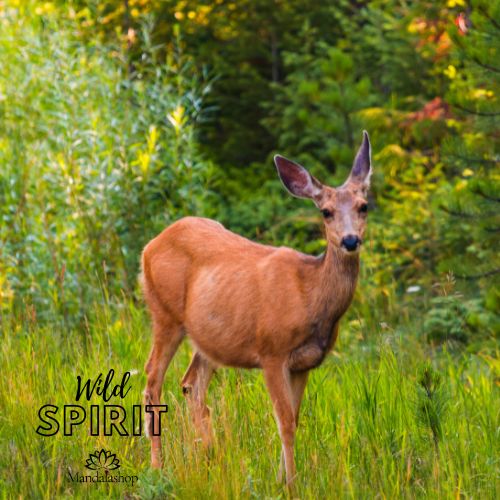
Discreet, graceful, and attentive to the slightest movement, the doe embodies a strength that does not need to assert itself to exist. Her delicate demeanor and natural vigilance make her a symbol of gentleness, sensitivity, and intuition.
In contemporary spirit animal symbolism, the doe represents kindness, attentiveness, and the ability to perceive what others miss. She invites us to pay attention to our feelings, our environment, and the emotions of those around us.
Unlike the stag, which is often associated with majesty, self-assertion, and renewal, the doe evokes a quiet inner strength. She reminds us that delicacy is not synonymous with weakness and that it is possible to show courage without seeking confrontation.
Her vigilance, however, has another side. Always alert to potential dangers, the doe can symbolize heightened sensitivity, a fear of conflict, or a tendency to step back to avoid causing offense.
The doe spirit animal thus invites us to ask ourselves: Do we know how to trust our intuition without letting our fears guide our decisions? Does our kindness sometimes lead us to forget our own needs?
Her lesson is one of gentleness that also knows how to set boundaries. She encourages us to preserve our sensitivity, listen to our instincts, and defend our personal space without giving up our kindness.
True gentleness isn’t about accepting everything, but about staying true to our nature while knowing how to protect ourselves.
Deer Totem Animal: Nobility, Renewal, and Inner Strength
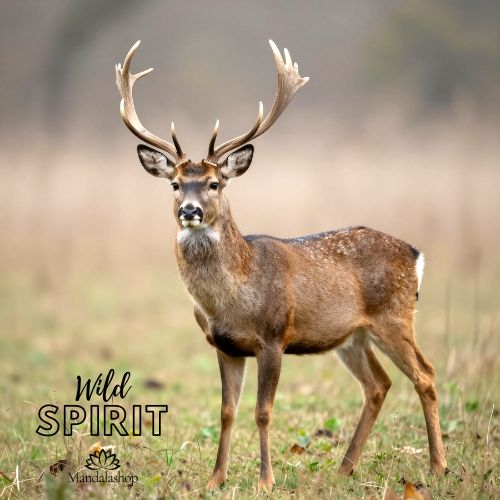
With its majestic antlers and elegant bearing, the deer inspires both respect and fascination. Featured in many mythologies and traditions, particularly Celtic ones, it is associated with the wilderness, renewal, and, in some tales, the passage between the visible world and the spiritual world.
The deer spirit animal symbolizes dignity, quiet strength, and the ability to renew itself. Its antlers, which shed and regrow each year, make it a particularly evocative image of cycles of transformation, personal growth, and new beginnings.
The deer also represents a form of natural authority. It does not need to constantly demonstrate its power: its mere presence is enough to command respect. Its symbolism thus invites us to develop our self-confidence, to stand by our convictions, and to move forward with assurance, without seeking to dominate others.
But this nobility can also have a downside. The stag can evoke pride, a difficulty in showing one’s weaknesses, or the need to preserve one’s image at all costs. By striving to remain dignified and in control of ourselves, we sometimes risk refusing the help we might need.
Unlike the doe, who is more closely associated with gentleness and sensitivity, the stag challenges us to examine our relationship with power and self-assertion. Do we know how to claim our place without trampling on others’? Are we willing to go through periods of vulnerability in order to rebuild ourselves more fully?
His lesson is one of strength that evolves with the seasons of life. He reminds us that losing something does not necessarily mean becoming weaker: it can also pave the way for a new chapter.
True greatness does not lie in always remaining strong, but in knowing how to renew oneself without losing one’s dignity.
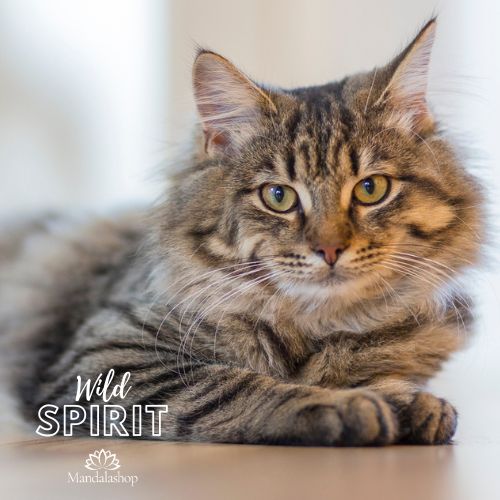
Cat Spirit Animal: independence, intuition, and mystery
Free-spirited, observant, and sometimes elusive, the cat has shared a special relationship with humans for millennia. Revered in ancient Egypt, associated with protection in some contexts and with witchcraft in the European imagination, it possesses a symbolism as rich as it is contradictory.
The cat as a spirit animal represents independence, intuition, and the ability to follow one’s own path. It evokes a personality that values freedom, knows how to observe before acting, and places great importance on personal space.
The cat also teaches us the art of balance. Capable of both long periods of rest and lightning-fast reactions, it reminds us that there is a time for action and a time for stillness. Its natural curiosity invites us to explore the unknown, while its discretion encourages us to look beyond appearances.
But its independence also has its limits. It can turn into mistrust, a difficulty in accepting help from others, or a tendency to shy away from commitments. The need to preserve its freedom can sometimes become a way of protecting itself from any relationship that runs too deep.
The symbolism of the cat thus prompts us to reflect on our relationship with autonomy and trust. Do we know how to remain true to ourselves while making room for others? Do we listen to our intuition, or do we sometimes use our mistrust as a barrier?
Its lesson is one of conscious freedom: knowing how to preserve one’s independence without giving up the bonds that enrich us, cultivating curiosity without losing discernment, and allowing oneself rest without guilt.
Being free does not mean living without attachments, but being able to choose the ones that suit us.
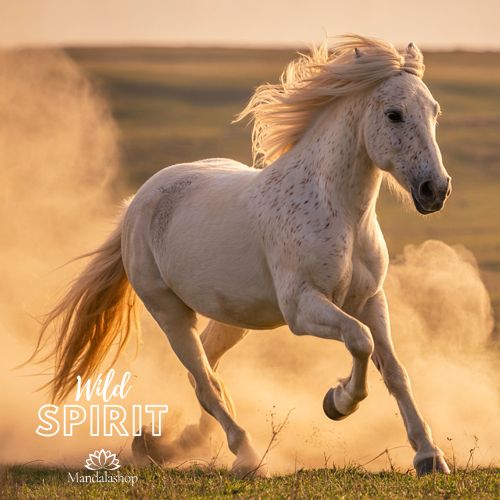
Horse Spirit Animal: freedom, vitality, and pushing one's limits
A symbol of movement and power, the horse has been a part of human history for millennia. As a companion on journeys, in work, and sometimes in war, it holds an important place in many cultures. Its speed, endurance, and energy make it a figure associated with freedom, adventure, and vital energy.
The horse as a spirit animal represents the drive that propels us forward, to explore new horizons and push beyond our limits. It evokes the courage to leave behind what is familiar in order to follow our aspirations, even when the path ahead remains uncertain.
But the horse does not symbolize independence alone. As a social animal, it maintains close relationships with its peers. This duality lies at the heart of its symbolism: the desire for freedom coexists with the need for belonging, trust, and cooperation.
Its energy, however, can become difficult to control. Impatience, impulsiveness, or the fear of standing still can lead us to take on more and more projects without taking the time to reflect on their true direction.
The symbolism of the horse thus invites us to distinguish between movement and flight. Are we moving forward because a goal drives us, or simply because we fear staying put? Do we know how to accept the constraints necessary to achieve our ambitions without feeling as though we’re losing our freedom?
The horse teaches us that power lies not only in speed, but also in the ability to channel our energy. It encourages us to trust our instincts, cultivate our endurance, and consciously choose the direction we wish to take.
Freedom isn’t about running endlessly, but about knowing which horizon we want to gallop toward.
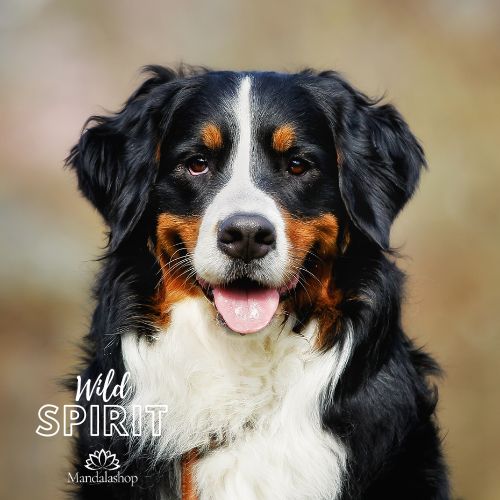
Dog Spirit Animal: loyalty, protection, and trust
A companion to humans for millennia, the dog embodies loyalty, protection, and trust. Whether as a guardian, a working partner, or a devoted friend, it symbolizes the strong bonds we build with those around us.
In various mythologies, the dog appears as a protector of the boundaries between worlds. Cerberus guards the entrance to the realm of the dead in Greek mythology, while Anubis, the Egyptian deity with the head of a dog, accompanies the deceased.
The dog spirit animal represents loyalty, courage, and a sense of devotion. It invites us to care for our loved ones, defend our values, and cultivate relationships based on trust.
But this loyalty also has a downside. In our eagerness to support others, we may neglect our own needs, constantly seek their approval, or cling to relationships that no longer serve us.
Its lesson is one of balanced loyalty. The dog reminds us that loving someone doesn’t mean accepting everything and that protecting others shouldn’t lead us to sacrifice ourselves.
It encourages us to build sincere bonds while remaining true to our convictions and our limits.
True loyalty also begins with self-respect.
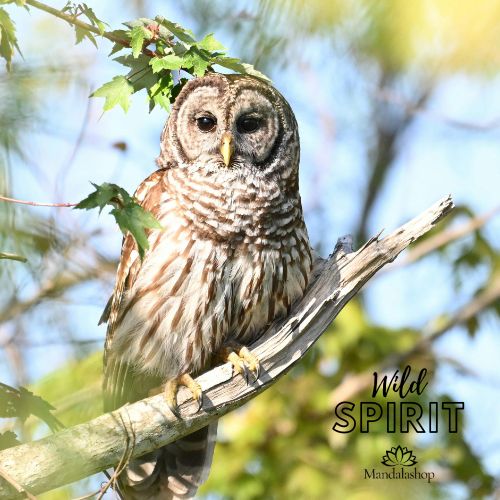
Owl Spirit Animal: wisdom, intuition, and clairvoyance
Silent and unobtrusive, the owl possesses a remarkable ability to navigate in the dark. Its piercing gaze and nocturnal habits have made it a symbol of wisdom, knowledge, and mystery.
In ancient Greece, it was notably associated with Athena, the goddess of wisdom and strategy. In other traditions, it may evoke omens or the mysteries of the night, illustrating the diversity of its symbolism.
The owl spirit animal represents intuition, discernment, and the ability to see beyond appearances. It invites us to observe before acting, to listen to what is left unsaid, and to step back when faced with complex situations.
The owl also evokes an inner wisdom that develops through silence and reflection. It reminds us that some answers take time and that it is not always necessary to act immediately.
But this clarity can turn into excessive mistrust. By constantly analyzing everything, we risk isolating ourselves, constantly doubting, or looking for hidden meanings everywhere.
Its lesson is that of intuition illuminated by discernment. The owl encourages us to trust our perceptions without confusing hunches with certainties.
Seeing beyond appearances also means accepting that we don’t understand everything.
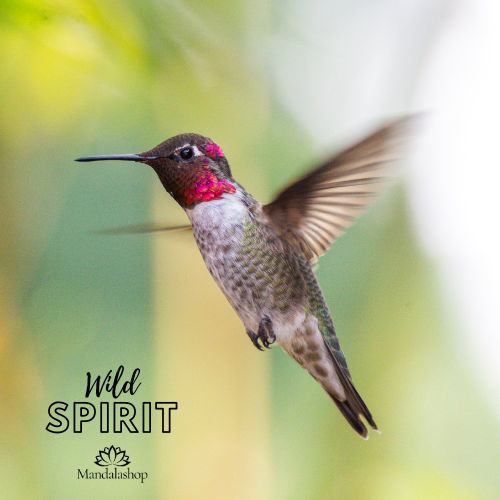
Hummingbird Spirit Animal: zest for life, lightness, and resilience
Small in size but bursting with energy, the hummingbird fascinates with its agility and ability to hover. Its vibrant colors and liveliness make it a symbol of joy, freedom, and adaptability.
In Aztec culture, the hummingbird was notably associated with Huitzilopochtli, a deity linked to the sun and war. Contemporary spiritual interpretations place greater emphasis on its symbolism of joie de vivre, love, and resilience.
The hummingbird spirit animal represents optimism, perseverance, and the ability to appreciate life’s small pleasures. Despite its apparent fragility, this bird possesses remarkable endurance. It reminds us that determination does not depend on physical strength.
Always on the move, the hummingbird invites us to cultivate our curiosity, embrace change, and maintain our enthusiasm, even during difficult times.
But this quest for lightness can also reflect a tendency to avoid unpleasant emotions or to constantly seek novelty, at the risk of losing stability.
Its lesson is one of mindful joy. The hummingbird encourages us to savor the present moment without ignoring difficulties, to move forward with perseverance, and to recognize the value of small actions.
Lightness does not preclude depth, any more than gentleness excludes strength.
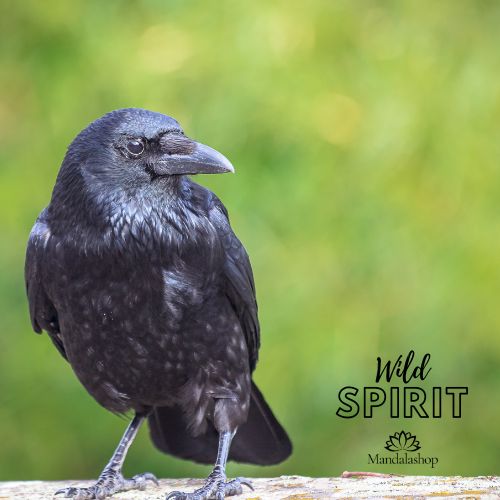
Raven Spirit Animal: Intelligence, Transformation, and Mystery
With its black plumage and piercing gaze, the raven fascinates as much as it intrigues. Often associated with bad omens in popular imagination, it nevertheless possesses a much richer symbolism.
In Norse mythology, Odin’s ravens, Huginn and Muninn, travel the world to bring him news. In certain Indigenous traditions of the North American Northwest Coast, the raven appears as a creator, a transformer, and sometimes a cunning figure.
The raven spirit animal represents intelligence, adaptability, and transformation. Its remarkable problem-solving abilities reinforce its image as a resourceful, observant animal capable of making the most of even the most complex situations.
Associated with transitions, it can also symbolize the end of one cycle and the beginning of another. Its presence in stories related to death thus evokes, on a symbolic level, change rather than a necessarily ominous omen.
But its intelligence also has a dark side: cunning can turn into manipulation, while curiosity can lead us to seek meaning everywhere.
Its lesson is one of discernment in the face of the unknown. The raven invites us to question our certainties, to embrace transformation, and to use our intelligence without losing our critical thinking.
What comes to an end can also pave the way for something new.
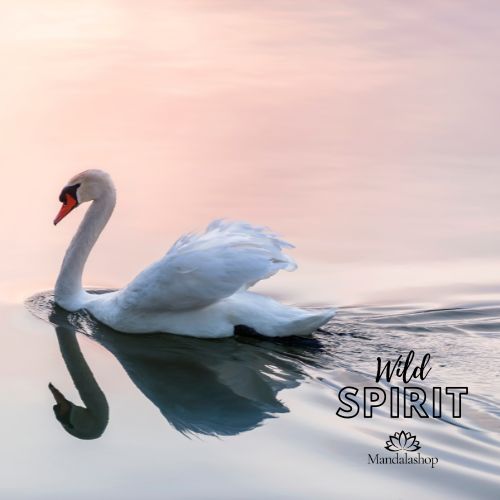
Swan Spirit Animal: Grace, Transformation, and Love
With its elegant appearance and fluid movements, the swan naturally evokes grace and serenity. Yet behind this apparent gentleness lies a powerful animal, capable of fiercely defending its territory and its young.
Featured in several European mythological tales, it is associated with beauty, love, and metamorphosis. Hans Christian Andersen’s fairy tale *The Ugly Duckling* has also reinforced its image of transformation and self-discovery.
The swan spirit animal symbolizes inner elegance, love, and acceptance of one’s true nature. It invites us to look beyond the opinions of others, to recognize our own worth, and to embrace the changes that accompany our growth.
The swan also evokes loyalty and commitment, as certain species form lifelong pairs. It reminds us of the importance of trust and authenticity in our relationships.
But this quest for harmony can become a trap when we try to maintain appearances, achieve an unattainable perfection, or avoid conflict.
Its lesson is one of authenticity. The swan encourages us to accept our imperfections, to cultivate sincere relationships, and to understand that true beauty does not depend on how others see us.
The most precious elegance is the kind that allows us to remain true to ourselves.
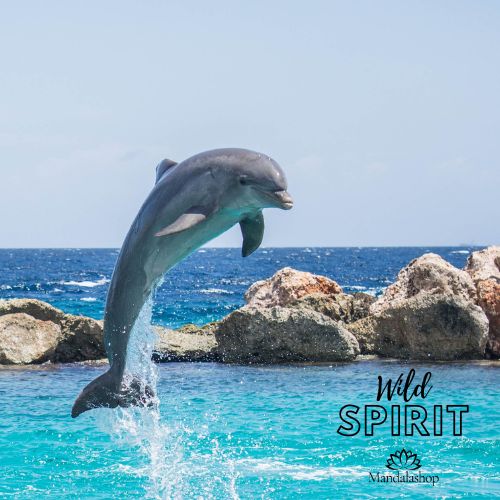
Dolphin Spirit Animal: communication, joy, and harmony
Playful, curious, and sociable, the dolphin fascinates us with its intelligence and the richness of its interactions. Its leaps out of the water and expressive behavior have made it a symbol of freedom, camaraderie, and joie de vivre.
In Greek mythology, it appears notably as a protector of sailors and a companion to certain deities, including Poseidon and Apollo.
The dolphin spirit animal represents communication, emotional intelligence, and cooperation. Living in complex social groups, it evokes mutual support, active listening, and the ability to build relationships based on trust.
The dolphin also invites us to rediscover our spontaneity. It reminds us that play, pleasure, and shared moments contribute to our balance, even when responsibilities take center stage.
But this need for connection can also become a weakness. The fear of displeasing others, the difficulty in coping with loneliness, or the desire to maintain harmony at all costs can lead us to suppress our true emotions.
Its lesson is one of authentic communication. The dolphin encourages us to express our feelings, to listen to others without forgetting ourselves, and to cultivate relationships in which everyone can remain true to themselves.
True harmony arises when we can be together without ceasing to be ourselves.
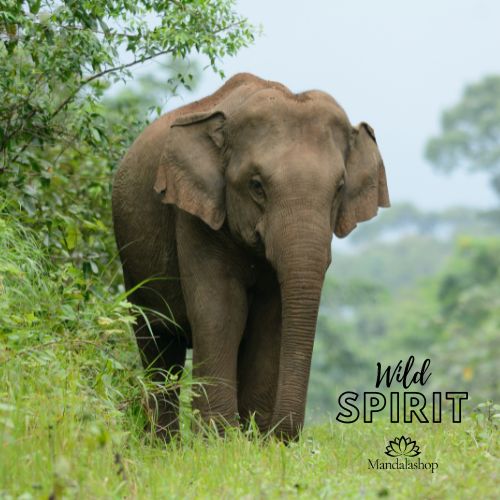
Elephant Spirit Animal: wisdom, memory, and protection
Imposing in size yet capable of great gentleness, the elephant commands respect. Its remarkable memory and close family bonds make it a symbol of wisdom, solidarity, and quiet strength.
In India, Ganesh, the elephant-headed Hindu deity, is particularly associated with wisdom, new beginnings, and the removal of obstacles.
The elephant as a spirit animal represents patience, loyalty, and wisdom gained through experience. It evokes a protective force that does not seek to impose itself but knows how to manifest itself when circumstances require it.
Elephants live in complex social groups, where experienced individuals play an important role. This organization reinforces their symbolic association with transmission, memory, and family ties.
But attachment to the past also has its limits. It can prevent us from accepting change or push us to shoulder responsibilities that are not ours to bear.
Its lesson is one of benevolent strength. The elephant encourages us to honor our history without becoming prisoners of it, to care for our loved ones while respecting our own limits, and to move forward with confidence.
Wisdom lies in remembering the past without letting it dictate our future.
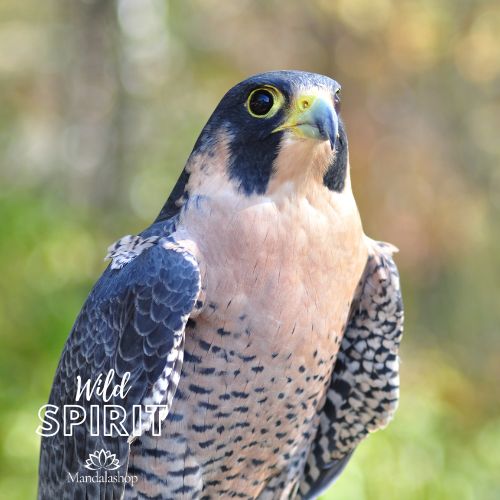
Falcon Spirit Animal: insight, focus, and determination
Fast, agile, and endowed with exceptional eyesight, the falcon fascinates with the precision of its movements. Its ability to spot prey from a great distance and strike at the right moment makes it a symbol of vigilance and mastery.
In ancient Egypt, the falcon was notably associated with Horus, the god of the sky and kingship, whose gaze evoked protection and power.
The falcon spirit animal represents foresight, focus, and determination. It encourages us to keep our goals in sight, to distinguish the essential from the superfluous, and to act with discernment.
Unlike the eagle, which is more closely associated with freedom and soaring to great heights, the falcon symbolizes precision in action. It reminds us that having a vision isn’t enough—we must also recognize the right moment to bring it to fruition.
But this focus can also become excessive. Impatience, an obsession with results, or the need to control everything can make us inflexible and cause us to miss out on other possibilities.
Its lesson is one of thoughtful determination. The falcon encourages us to observe before acting, to focus our energy on what truly matters, and to know how to adjust our course.
Seeing far ahead is a quality. Knowing when to act is a strength.
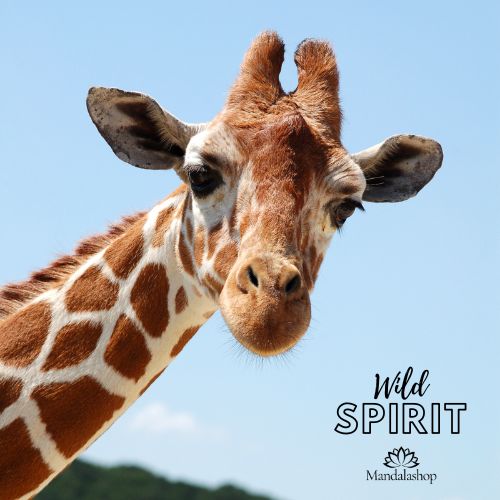
Giraffe Spirit Animal: insight, gentleness, and the ability to step back and see the bigger picture
With its long neck, which allows it to scan the horizon above the vegetation, the giraffe naturally evokes the ability to rise above and see beyond appearances. Its unique silhouette—both imposing and elegant—makes it a symbol of gentleness, clarity, and confidence in its own uniqueness.
In a contemporary symbolic interpretation, the giraffe represents the precious ability to avoid becoming trapped by immediate concerns. It reminds us that sometimes a shift in perspective is all it takes to reveal possibilities that were previously invisible. Its peaceful gait also suggests a kind of quiet strength: moving forward without haste, while remaining attentive to its surroundings.
But seeing far ahead also comes with its challenges. By constantly seeking the big picture, we may lose touch with the realities of daily life or hesitate to take action. The giraffe, then, invites us to find a balance between a broad perspective and staying grounded in the present.
Its message could be summed up this way: keep your eyes on the horizon, without forgetting the path beneath your feet.
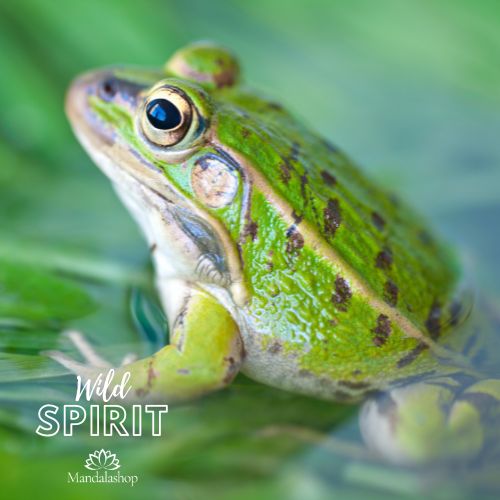
Frog Spirit Animal: Transformation, Renewal, and Adaptability
From egg to tadpole, and then from tadpole to adult, the frog undergoes a spectacular metamorphosis. This evolution, combined with its ability to live both in water and on land, makes it a symbol of transformation, renewal, and adaptability.
In ancient Egypt, the goddess Heqet, depicted with a frog’s head, was associated with birth and fertility. In other traditions, this animal symbolizes rain, fertility, and the return of life.
The frog spirit animal represents the ability to evolve, turn a new page, and embrace new beginnings. It reminds us that certain transformations are necessary for growth, even when they require us to let go of our habits.
Its connection to water also reinforces its emotional dimension. The frog invites us to listen to our feelings and adapt to circumstances without losing our balance.
But this quest for change also has its limits. It can reflect a certain instability, a tendency to shy away from difficulties, or to give up too quickly on things that require patience.
Its lesson is one of conscious transformation: knowing how to recognize the right moment to evolve, without trying to turn everything upside down at the slightest obstacle.
Changing your life isn’t always necessary. Sometimes, all it takes is changing the way you approach it.
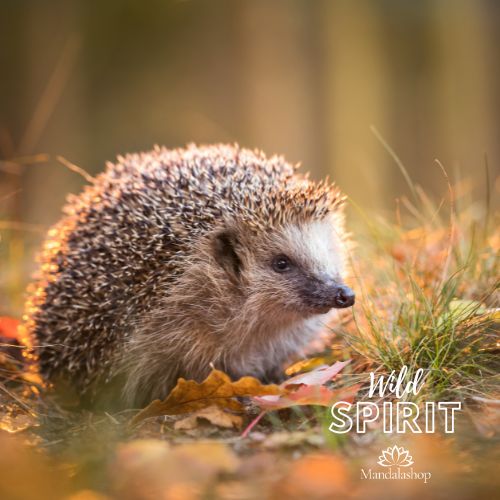
Hedgehog Spirit Animal: Protection, Sensitivity, and Caution
Small and unassuming, the hedgehog has a particularly effective defense mechanism: when it feels threatened, it curls up into a ball and raises its quills. This trait makes it a symbol of protection, caution, and the preservation of personal space.
The hedgehog spirit animal represents sensitivity, discretion, and the ability to set boundaries. It reminds us that we don’t have to be imposing to defend ourselves and that gentleness can coexist perfectly with firmness.
Primarily active at night, the hedgehog also evokes observation, patience, and self-reliance. Its symbolism invites us to respect our own rhythm, to take the time to assess situations, and to avoid exposing ourselves unnecessarily to conflict.
But its quills can also represent the barriers we erect around ourselves. In our eagerness to avoid getting hurt, we risk closing ourselves off or pushing others away.
Its lesson is one of balanced protection: learning to defend our personal space while remaining open to relationships and experiences that enrich us.
Protecting ourselves is essential, but sometimes we must be willing to let our guard down to allow others to get closer.
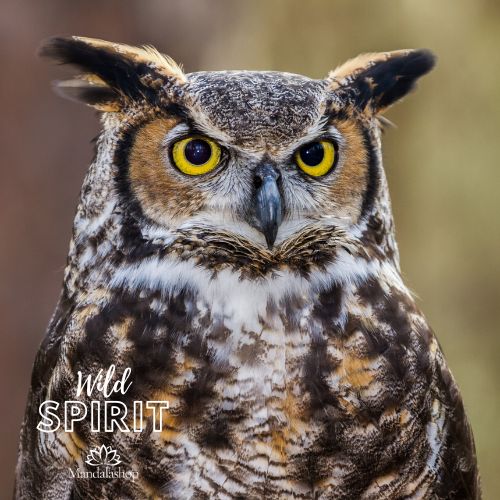
Eagle-Owl Spirit Animal: Introspection, Mystery, and Transition
With its distinctive tufts and nocturnal habits, the eagle-owl has a unique presence. Its silent flight and eyes attuned to the darkness have inspired numerous tales, sometimes associated with wisdom, sometimes with omens.
In some traditions, nocturnal birds of prey evoke the mysteries of the night and the transitions between different stages of life. These interpretations, however, vary considerably across cultures.
The eagle-owl spirit animal symbolizes introspection, clarity, and the ability to navigate periods of uncertainty. It invites us to look at what we sometimes prefer to ignore: our fears, our contradictions, or the changes we resist.
While the owl is more closely associated with discernment and knowledge, the barn owl here represents the courage to explore our inner world. Its symbolism encourages us to accept moments of solitude as opportunities to better understand ourselves.
But this inner search also has its limits. It can turn into isolation, mistrust, or a tendency to dwell on our worries.
Its lesson is that of constructive introspection. The owl reminds us that understanding our shadow sides does not mean locking ourselves away in them, but learning to move through them so we can move forward with greater serenity.
Sometimes we must accept the darkness to discover what it can teach us.
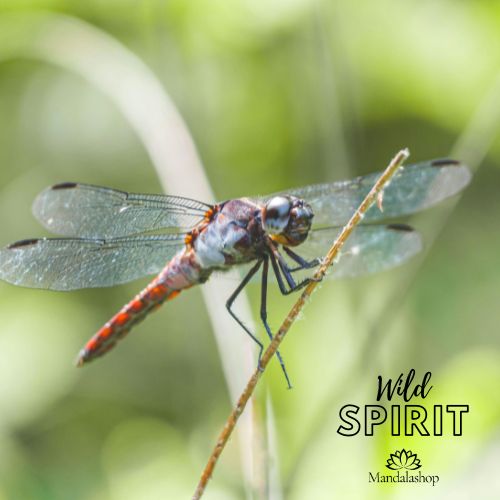
Dragonfly Spirit Animal: Transformation, Lightness, and Illusion
With its transparent wings and agile flight, the dragonfly seems to dance above the water. Yet, before taking flight, it spends a long period of its life as an aquatic larva. This spectacular metamorphosis fuels its symbolism of transformation and renewal.
In Japan, dragonflies hold an important place in traditional folklore, particularly as symbols of courage and determination.
The dragonfly spirit animal represents a shift in perspective, adaptability, and the ability to look beyond appearances. Its iridescent wings, whose colors shift with the light, symbolically evoke illusions and the different ways of perceiving the same reality.
It invites us to step back from our certainties, embrace change, and recognize the possibilities that emerge when we agree to see things differently.
But this lightness also has its downside. It can reflect a tendency to remain on the surface, to avoid commitments, or to constantly seek new experiences without giving them depth.
Its lesson is one of authentic transformation. The dragonfly encourages us to evolve without losing our balance, to distinguish appearances from what is essential, and to understand that each stage of our life sometimes paves the way for the next.
Changing our perspective can transform the way we live, even when nothing around us has changed.
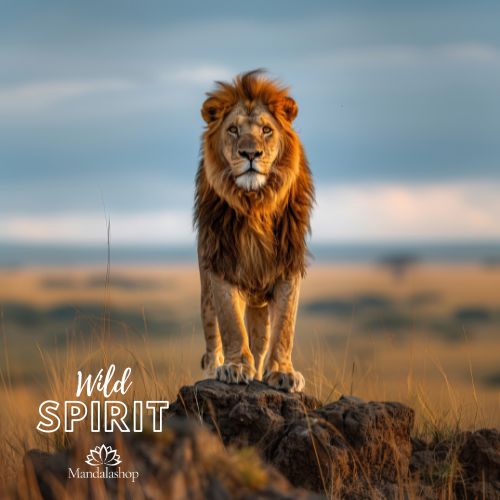
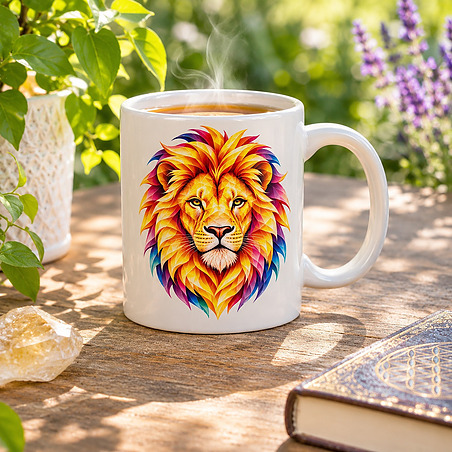
Lion Spirit Animal: courage, confidence, and leadership
With its imposing mane and power, the lion has long been associated with royalty, courage, and authority. Featured in many traditions, it appears in particular as a symbol of protection, sovereignty, and strength.
In ancient Egypt, the goddess Sekhmet, depicted with a lioness’s head, embodied a power that was both protective and formidable.
The lion as a spirit animal represents self-confidence, courage, and the ability to take one’s rightful place. It invites us to assert our convictions, take on our responsibilities, and defend what is important to us.
The lion also evokes leadership. Its symbolism reminds us that true authority rests not only on power, but also on the ability to protect, unite, and inspire trust.
But this strength has its downside. Pride can turn into arrogance, courage can become recklessness, and the desire to lead can lead to a need to control everything.
Its lesson is one of controlled power. The lion encourages us to develop our self-confidence without crushing others, to acknowledge our vulnerabilities, and to understand that we do not need to constantly prove our worth.
It reminds us that lasting strength goes hand in hand with discernment and respect.
True power lies not in domination, but in knowing when and why to act.
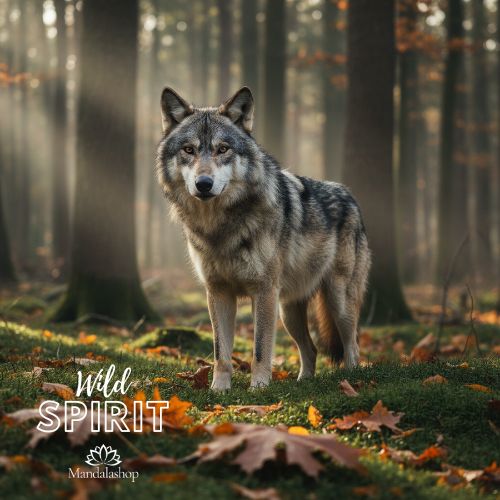
Wolf Spirit Animal: instinct, freedom, and team spirit
An iconic wild animal, the wolf fascinates with its intelligence, endurance, and the complexity of its social relationships. Often portrayed as a loner in popular culture, it nevertheless generally lives in close-knit family groups.
In Roman mythology, the she-wolf said to have raised Romulus and Remus illustrates the wolf’s protective and nurturing nature.
The wolf as a spirit animal symbolizes instinct, loyalty, and the balance between independence and belonging. It invites us to listen to our intuition, defend our freedom, and recognize the importance of the bonds that unite us with others.
The wolf also evokes cooperation and the passing down of knowledge. Its symbolism reminds us that autonomy does not preclude mutual support and that we can find our strength both within ourselves and within a group.
But this duality comes with its own challenges. The need for independence can lead us to isolate ourselves, while attachment to the group can lead us to conform to the expectations of others.
Its lesson is one of freedom that knows how to preserve bonds. The wolf encourages us to follow our own path without rejecting those who accompany us, to trust our instincts while remaining open to others.
Finding our place does not mean giving up our freedom, but discovering with whom we wish to share it.
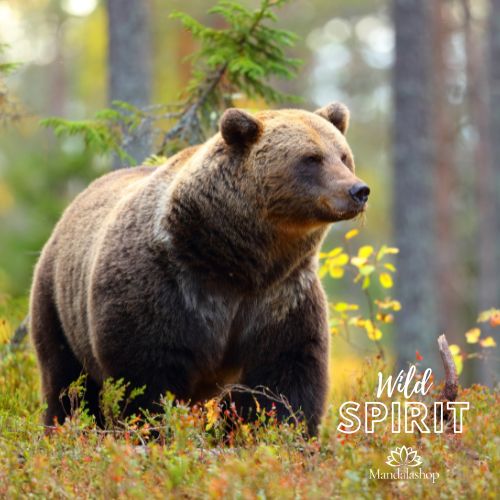
Bear Spirit Animal: inner strength, protection, and introspection
Powerful and imposing, the bear inspires both respect and fascination. Capable of great determination, but also of long periods of rest, it symbolizes inner strength, protection, and the need to recharge.
In certain traditions of Europe and North America, the bear plays an important role in stories and spiritual practices. Its meanings vary among different peoples, but its power and connection to nature are often emphasized.
The bear spirit animal represents courage, self-reliance, and the ability to draw on one’s own resources. It invites us to defend our personal space, protect those we love, and recognize our strength, even when we are going through difficult times.
Its annual cycle, marked in some species by hibernation, symbolically evokes withdrawal, introspection, and the renewal of strength.
But this independence can also become a weakness. By insisting on facing everything alone, we risk isolating ourselves, refusing help from others, or reacting with excessive firmness.
Its lesson is one of balanced strength. The bear reminds us that there is a time to act and a time to rest, and that recognizing our limits in no way diminishes our power.
Being strong also means knowing when to slow down and take care of ourselves.
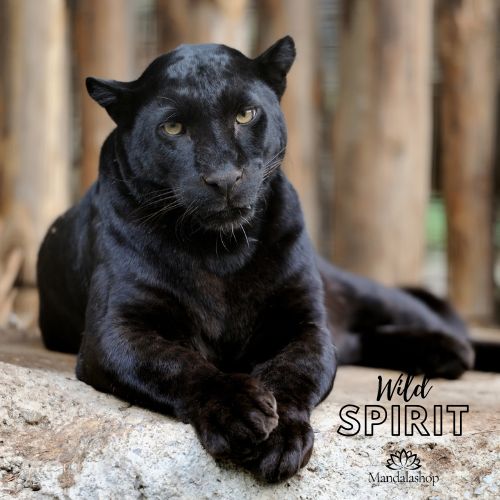
Panther Spirit Animal: Mystery, Intuition, and Personal Power
Discreet, agile, and powerful, the panther moves with silent confidence. Often depicted in black in symbolic imagery, it evokes mystery, independence, and self-control.
The black panther is not a distinct species: it is generally a leopard or a jaguar exhibiting melanism, which accounts for its dark coloring.
The panther spirit animal represents inner confidence, intuition, and the ability to face the unknown. Its discretion and precision make it a symbol of patience, observation, and determination.
It invites us to recognize our power without constantly seeking to display it. Its symbolism also evokes the courage to explore aspects of ourselves that we know little about or prefer to hide.
But this hidden strength can have its limits. Independence can turn into mistrust, the need for control into rigidity, and discretion into difficulty expressing emotions.
Its lesson is one of conscious power. The panther encourages us to trust our abilities, to act with discernment, and to accept our vulnerability without viewing it as a weakness.
It reminds us that true confidence does not always need to be on display.
The most impressive strength is sometimes the one that is expressed without fanfare.
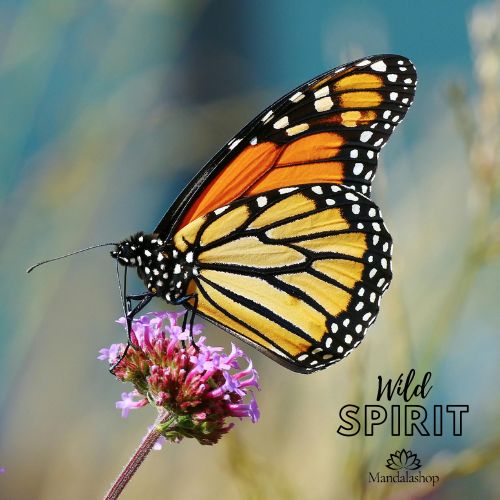
Butterfly Spirit Animal: Transformation, Rebirth, and Freedom
From caterpillar to butterfly, few animals so vividly illustrate change. Its spectacular metamorphosis makes it a symbol of rebirth, freedom, and personal growth.
In ancient Greece, the word *psyche* could refer to both the soul and the butterfly—an association that has enriched its spiritual dimension.
The butterfly spirit animal represents transformation, hope, and the ability to embrace new stages of life. It invites us to let go of what no longer serves us, to acknowledge our growth, and to accept that certain periods of transition may be uncomfortable.
Its lightness also evokes the beauty of the present moment and the freedom to explore new horizons. The butterfly reminds us that change can reveal possibilities we never would have imagined before.
But this quest for renewal also has its limits. It can reflect a difficulty in committing, a tendency to avoid constraints, or the hope that an external transformation will be enough to solve our problems.
Its lesson is one of patient evolution. The butterfly encourages us to respect our own pace, to accept the steps necessary for our development, and not to fear leaving certain old habits behind.
To take flight, we sometimes have to accept that we are no longer who we once were.
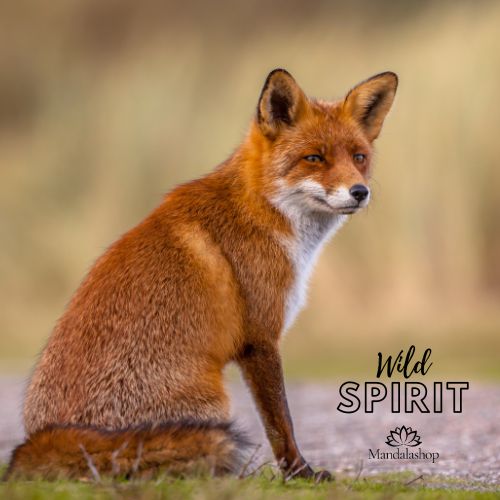
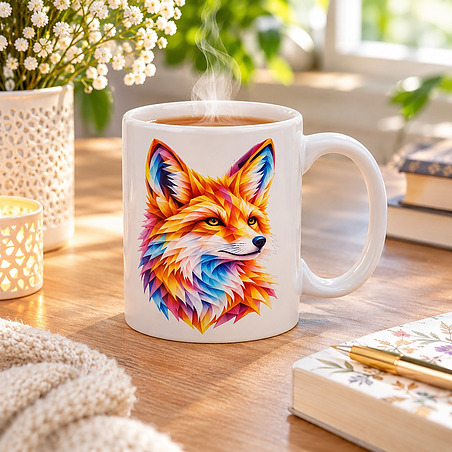
Fox Spirit Animal: intelligence, adaptability, and cunning
Discreet, agile, and particularly resourceful, the fox has a reputation for cunning that spans cultures. From European fables to Japanese tales featuring *kitsune*, it often appears as an intelligent, unpredictable, and sometimes deceitful character.
The fox spirit animal represents ingenuity, adaptability, and the ability to find creative solutions. It invites us to observe our surroundings, to be flexible, and to use our intelligence rather than force to overcome obstacles.
The fox also evokes independence and curiosity. Its symbolism reminds us that there is rarely just one way to achieve a goal and that a change in strategy can sometimes open up unexpected possibilities.
But this intelligence also has its dark side. Caution can turn into mistrust, discretion into concealment, and cunning can lead to manipulating others to get what we want.
Its lesson is that of responsible intelligence. The fox encourages us to remain creative and attentive, without losing our sincerity or our sense of ethics.
It reminds us that adaptability is not a weakness, but a way to navigate change without giving up on our goals.
It’s not always necessary to force our way through: sometimes, all we need to do is find another path.
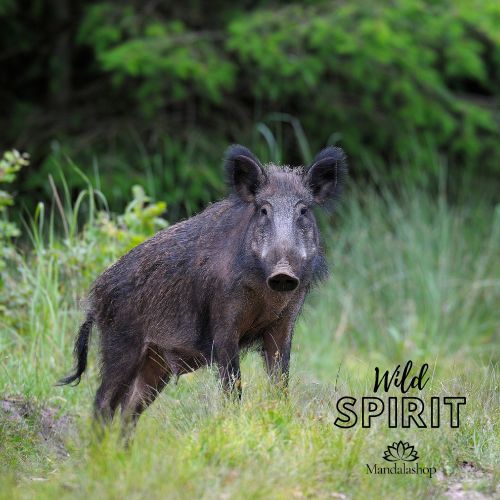
Wild Boar Spirit Animal: Courage, Determination, and Instinct
Sturdy, independent, and capable of fiercely defending its territory, the wild boar embodies a wild force that inspires both respect and caution. Its energy and determination have earned it an important place in several European traditions.
In Celtic folklore, the wild boar is seen as a prestigious animal, associated with martial power and certain heroic tales.
The wild boar spirit animal represents courage, perseverance, and the ability to overcome obstacles. It encourages us to stand up for our convictions, to show tenacity, and not to give up as soon as difficulties arise.
Its connection to the earth also evokes instinct, a sense of grounding, and a form of direct, unadorned strength. The wild boar reminds us of the importance of staying true to our nature and not letting ourselves be intimidated.
But this determination can become excessive. Stubbornness, impulsiveness, or a reluctance to acknowledge one’s mistakes can turn courage into unnecessary confrontation.
Its lesson is one of controlled strength. The wild boar encourages us to move forward with conviction while knowing when to change our strategy.
It reminds us that defending our values does not mean we have to fight every battle.
Courage is not about charging headlong into things, but about knowing what is truly worth defending.
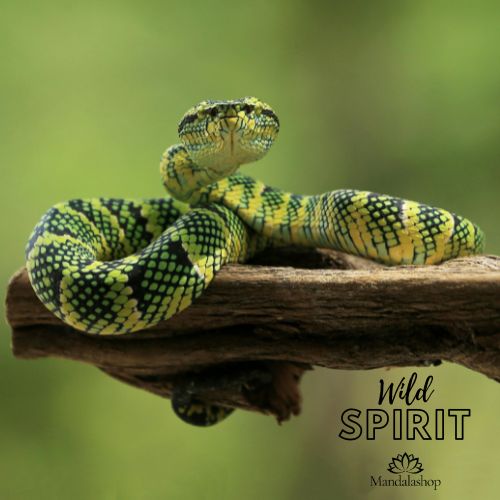
Snake Spirit Animal: Transformation, Healing, and Wisdom
Mysterious and often misunderstood, the snake has one of the most contrasting symbolic meanings in the animal kingdom. Depending on the culture, it can represent wisdom, fertility, healing, danger, or temptation.
In ancient Greece, it was notably associated with Asclepius, the god of medicine, whose staff entwined with a serpent remains a recognized medical symbol.
The snake spirit animal represents transformation, renewal, and inner knowledge. Its ability to shed its skin—regularly discarding its old skin—symbolically evokes the stages of change and the need to let go of what no longer serves us.
The snake also invites us to develop our discernment. Its discreet behavior and close relationship with its environment reinforce its association with instinct and vigilance.
But this symbolism also has a darker side. The snake can evoke mistrust, manipulation, desires that are difficult to control, or fear of the unknown.
Its lesson is one of conscious renewal. It encourages us to recognize what needs to change in our lives, without systematically trying to avoid difficulties.
It reminds us that certain transformations require letting go of old defenses in order to grow.
To move forward, we sometimes have to accept leaving behind an old version of ourselves.
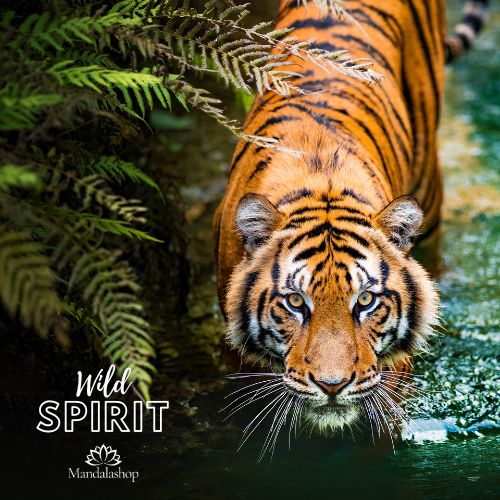
Tiger Spirit Animal: courage, passion, and independence
Powerful, agile, and solitary, the tiger captivates with its elegance and strength. Featured in many Asian traditions, it is notably associated with courage, protection, and power.
In certain Chinese traditions, the tiger holds an important place among protective animals and symbolizes an energy capable of warding off harmful influences.
The tiger spirit animal represents determination, self-confidence, and independence. It invites us to recognize our potential, defend our personal territory, and pursue our goals with courage.
The tiger also evokes passion and intensity. Its symbolism reminds us that our desires can become a tremendous source of energy when they are directed toward what truly matters.
But this power also carries its risks. Impulsiveness, pride, or the need to control everything can lead us to act without thinking or to view others as adversaries.
Its lesson is one of controlled energy. The tiger encourages us to be bold without succumbing to aggression, to preserve our independence without rejecting others, and to transform our passions into constructive actions.
It reminds us that strength lies not only in our ability to act, but also in our ability to restrain ourselves.
Power becomes a true virtue when it is accompanied by self-control.
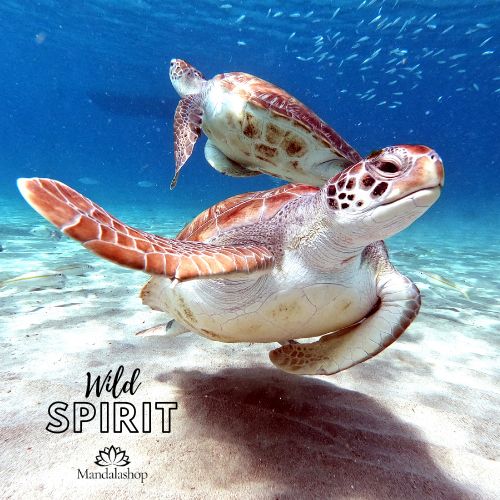
Turtle Spirit Animal: patience, protection, and longevity
With its protective shell and measured movements, the turtle embodies patience, stability, and perseverance. The remarkable longevity of certain species reinforces its association with wisdom and the passage of time.
In many traditions, particularly in Asia and in certain Indigenous North American narratives, the turtle holds significant symbolic importance. Depending on the culture, it can symbolize longevity, stability, or even the Earth itself.
The turtle spirit animal represents grounding, protection, and the ability to move forward at one’s own pace. It reminds us that lasting progress isn’t always spectacular and that we don’t have to rush to achieve our goals.
Its shell also symbolizes our inner space—that safe haven we can preserve even when the outside world becomes turbulent.
But this caution also has its limits. It can turn into inaction, resistance to change, or a tendency to withdraw into ourselves as soon as a difficulty arises.
Its lesson is one of serene perseverance. The turtle encourages us to respect our own pace without giving up on moving forward, to protect our balance while remaining open to new experiences.
Moving slowly isn’t a problem, as long as we keep moving in the right direction.
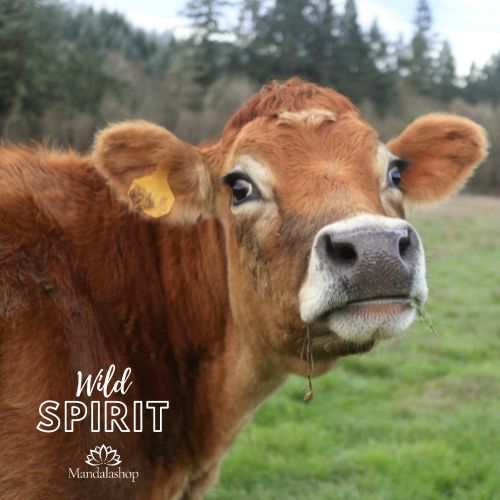
Cow Spirit Animal: abundance, patience, and generosity
Cows have been part of human society for millennia and are associated with fertility, food, and abundance. In Hinduism, it holds a particularly revered place, especially because of its connection to motherhood, generosity, and the preservation of life.
Its symbolism, however, is not limited to material prosperity. The cow also evokes patience, stability, and the ability to care for others without constantly seeking recognition. Its generally peaceful nature reminds us of the importance of natural rhythms, rest, and simple pleasures.
In a personal interpretation, it can represent the need to rediscover inner security, to cultivate gratitude, or to devote more attention to what truly nourishes us, both literally and figuratively.
Its shadow side emerges when devotion becomes a constant sacrifice. Giving selflessly does not mean forgetting oneself. The cow thus reminds us that generosity also begins with respecting one’s own needs.
It symbolizes an abundance that is measured not only by what we possess, but also by what we share and what we know how to appreciate.


 List of Spirit Animals and Their Meanings
 End of an Era: Are We on the Threshold of a New World?
 Samhain: What Does the Dark Season Really Reveal?

